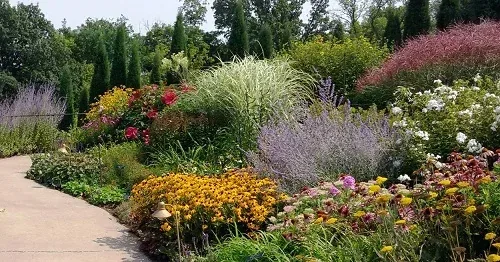
A true no-work garden may not be realistic, but it is a great goal to work toward. You can have a lovely, very low-maintenance garden. Choose tough plants that suit your site, fill beds so weeds have no room, mulch deeply and water with soaker hoses. Hardscaping and an easy-care lawn cut the work even further.
Why aim for no work
Our lives are so busy that even devoted gardeners sometimes struggle to keep up with the upkeep of beautiful gardens. But even the busiest of us can still have a lovely, low-maintenance oasis. Build as many of these ideas as you can into your plans. You'll spend more time sipping lemonade on the garden bench than bent over the plants.
If you are truly aiming for a "no work" garden and lawn, you don't need to resort to concrete and artificial turf. But you do need to focus completely on that goal, and think about sustainable ideas before you choose plants. Let the no-work objective drive your plant and design choices, and change the way you think about your relationship with nature on your property.
How to create a low-maintenance landscape
Soil and beds
Good soil and generous beds prevent most of the work before it starts. Get them right once and you won't have to redo them.
- Start with great soil: well loosened, well drained and weed free.
- Rich soil matters less if you choose the right plants. When plants do need feeding, top-dress with compost, which feeds the soil slowly.
- Make beds for shrubs and perennials large enough that plants can grow and spread without trimming.
- Plan beds to be completely filled when the plants reach full size, so weeds have no room.
Plants
The right plants in the right place look after themselves. Fewer kinds, planted in bigger groups, also means less to learn.
- Choose plants perfectly suited to your conditions: sun, soil and climate.
- Choose only plants that are as self-sufficient as possible. Natives are an excellent choice, needing little or no watering and feeding.
- Limit the number of different plants. Large swaths of one plant can be very pleasing, even dramatic, and you have fewer plants' needs to learn.
- Don't plant annuals. Instead, buy a ready-made container of annuals and tropicals to accent a sitting area.
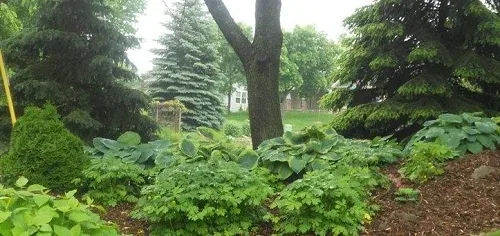
- Fill shady areas with hosta and other groundcovering shade plants.
- Surround trees with woodland plants that don't mind shade and tree roots.
- Fill large areas with slow-growing shrubs. Most evergreens, shade trees and flowering trees need little or no care once established.
- Ornamental grasses offer all-season beauty with virtually no care.
Mulch and water
Mulch and drip irrigation take care of most weeding and watering. Both are set up once in spring.
- Mulch deeply to hold soil moisture and stop weeds. Mulch also unifies your design and keeps the garden looking neat.
- Use drip irrigation. Wind soaker hoses through the garden in spring and leave them there all season.
- To water, just hook up the hose and turn on the faucet. Whole beds get watered, with no water lost to evaporation.
Paths, furniture and accessories
Choose materials that never need painting or staining. Then add a place to sit and enjoy it.
- Add wide, no-care paths of gravel, permeable pavers or groundcover.
- Use hardscaping to add interest and reduce lawn and garden space. There are plenty of low- to no-maintenance ideas below.
- Choose patio and lawn furniture of composite, recycled material or aluminum. If you insist on wood, hardwood needs less care than softwood.
- Use no-care accessories, such as vintage items or pieces allowed to age.
- Be sure to include beautiful sitting areas.
High-maintenance plants to skip
Some plants need regular work all season. For a no-work garden, leave out:
- Annuals.
- Vegetables.
- Tender plants.
- Plants that need staking.
- Plants grown from seed.
- Rabbits' favorite plants.
- Climbing plants.
Low- to no-maintenance plants
Resist the urge to design a unique garden with lots of different flowers. Stick with these no-fail garden staples.
Perennials and bulbs
These perennials bloom for years with almost no help. Most are drought tolerant once established.
- Bulbs need virtually no care once planted. Choose spring, summer and fall bloomers.
- Purple coneflower (Echinacea purpurea), the species, is virtually bulletproof.
- Rudbeckia blooms freely and essentially takes care of itself.
- 'Stella de Oro' daylily blooms all summer.
- Lady's mantle (Alchemilla mollis) gives great foliage interest.
- Lavender: most are Zone 5 and warmer; skip in Zone 4 unless you choose a hardy kind.
- Russian sage thrives in heat and drought.
- Sedum is easy and fall flowering, from groundcovers to tall kinds.
- Perennial grasses are usually drought tolerant and only need cutting down once a year.
Groundcovers, shrubs and trees
These fill space for years and need little trimming. Give them room to spread.
- Cranesbill, the perennial geranium, is an easy flowering groundcover.
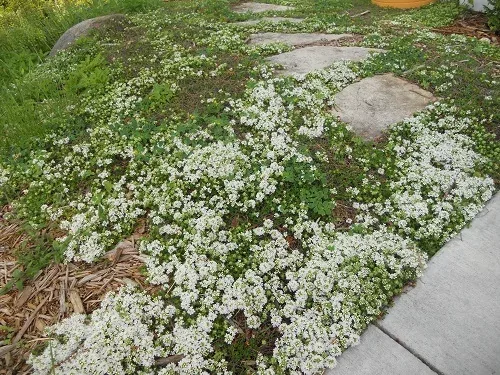
- Creeping thyme (Thymus) is a tough, flowering groundcover you can walk on.
- Vinca minor makes a lovely groundcover.
- Rugosa roses, the original salt spray rose, can be left to fend for themselves.
- Daphne. All parts are poisonous, so keep it away from children and pets.
- Euonymus, but not burning bush (Euonymus alatus). It is a restricted invasive plant in Minnesota and Wisconsin.
- Holly and flowering trees need little care once established.
- Herbs add foliage and are easy care, aromatic and useful.
Be careful with invasive and fast-growing perennials and natives. They need no care, but they can quickly take over a garden. Ask carefully at a trusted garden center. For more choices, see low-maintenance perennials and low-maintenance shrubs.
Low-maintenance hardscaping
A common suggestion for a low-maintenance landscape is to replace lawn with gardens. That isn't always less work, because a well-managed lawn is fairly easy. Managing the turf well can keep lawn in your plan. But there is much more you can do to reduce work and add interest.
- Make 4- to 8-foot-wide paths of permeable gravel or crushed rock, to suit the size of your property.
- Use deep crushed gravel, and set stepping stones or pavers in the path.
- Make large sitting areas with permeable pavers.
- Use gravel, crushed rock or permeable pavers for large service areas: trash, storage bins or sheds, tools and compost.
- Replace lawn areas with a large deck of no-maintenance composite.
- Replace lawn areas with permeable paver patios.
- Accent the garden with a gazebo or pergola of recycled or composite materials, or aluminum instead of wrought iron.
The "hardest" hardscape materials are the lowest maintenance. Gravel gets strewn about, wood decking needs staining and composite may need a little cleaning. Slate and concrete slabs may need only an occasional sweeping.
A minimal-care lawn
There are several ways to keep an easy-care "lawn" space, depending on your preferences. You can reduce, or even eliminate, the lawn creatively, naturally and beautifully.
- Shape bed edges in long, straight lines or gentle curves. Edged or paved borders are easiest to mow.
- Use a mulching mower and leave the clippings on the lawn.
- Keep the grass 3 inches or longer.
- Water deeply, early in the day and infrequently.
- Fertilize lightly and infrequently, just enough to keep the lawn healthy. Aerate as needed.
- Use a low-maintenance grass that needs less mowing, water and fertilizer.
Or replace large areas of lawn altogether:
- A wildflower garden only needs mowing once a year.
- Eco-friendly groundcovers need no mowing and virtually no care.
- Artificial turf really does look and feel better than ever.
High-maintenance plants you can't give up
We all have things we just can't give up, perhaps beloved delphiniums or a small vegetable plot. If you must keep them, put them where they are easy to reach and close to the faucet. Grow container plants in very large troughs or barrels to cut down on watering. And don't get carried away with must-haves: your goal is less work!