Best Performing Perennials
Proven perennial winners hardy in Northern and Midwest climates
Listed here are some of the most reliable hardy perennials for northern and Midwest gardens.
Keep in mind that a severe winter in your zone may actually expose your plants to conditions of a more northern zone.
Some winter protection is always recommended in the north or Midwest garden to ensure that your perennials survive whatever the weather presents, even hardy perennials.
Hardy perennials are heavily protected with deep mulch leaves mounded in and around the base, and a good snow cover will often survive winters in zones north of their hardiness rating.
Be sure to see the Perennial Index for complete information on more Perennials.
Adnophora Liliifolia
Full sun to mostly shade
Hardy in zones 3-9.
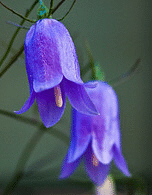
This perennial, also referred to as ladybells or grannybells, has a tendency to spread easily through both its seeds and vigorous runners. Its clusters can be quite stunning, displaying dainty purple-blue hanging bells atop light green foliage, blossoming from late summer until autumn.
The stems that provide support are both tall and sturdy. This highly adaptable perennial can tolerate a wide range of soils and levels of sunlight exposure. Although well-drained soil is a requirement, it prefers moist, rich soil.
In warm southern climates, Adnophora is an excellent alternative to its relative, Campanula. It reaches a height of 18 inches and a width of 12 inches.
To avoid reseeding, it is recommended to deadhead. Division can be challenging due to its deep roots. This perennial is long-lived.
Read more on Adnophora Liliifolia
Agastache
Full sun to light shade
Hardy in zones 5-10B.
Agastache, also known as Hyssop and hummingbird mint, is a perennial genus that includes a wide variety of species, all of which attract butterflies and hummingbirds.
Generally, they prefer full sun, bloom from midsummer to autumn, are drought tolerant, and make excellent container plants. They have an upright growth habit with tall flower spikes, and removing spent spikes will encourage more blooming.
Although most Agastache thrive in the drier zone 5 and warmer growing areas, some species can even flourish in the cold, wet winters of the northeast. Agastache comes through winter best if left uncut. In spring, cut back to about 4 inches.
Since most Agastache self-seed readily, it is recommended to deadhead to prevent reseeding. The Perennial Index lists several varieties of Agastache.
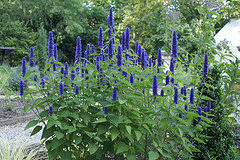
Agastache foeniculum, also known as anethiodorum, is an excellent choice for the north-central growing zones. As it is found natively in northern Wisconsin, it should be hardy to zone 4. Commonly called anise hyssop or Blue Giant Hyssop, its leaves are often used for seasoning and tea, emitting an aroma similar to mint, anise, or licorice.
It grows up to 4 feet tall, producing dense spikes of bright blue tubular flowers in July and August. Blue Giant prefers full sun and well-drained soil, but can also thrive in part shade with moist conditions. This is a must-have in the north-central garden for fragrance and attracting wildlife. It is also deer-resistant.
Read more on Agastache here.
Asiatic lily (also Oriental lily) (lilium)
Full sun to part shade
Hardy in zones 3-8.
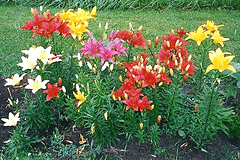
Oriental lilies are known for their striking masses of blooms in pinks, whites, yellows, and reds. They generally have larger blooms and are larger overall, often blooming later than Asiatic lilies.
Asiatic lilies, on the other hand, are available in a wider range of colors and multiply more rapidly. They are easier to grow than Orientals and can tolerate a wider range of soils. Orientals, however, are fragrant and sometimes have more "tropical" looking blooms.
Both varieties bloom generally in June and July and make great cut flowers. Corms multiply rapidly and can be easily divided and thinned as needed every 3 to 5 years.
Lilium is hardy and robust, but too much shade can result in spindly stems that struggle to support the masses of blooms. It is recommended to give them at least 6 to 8 hours of sunlight for strong plants.
Lilium does not thrive in wet soils, and clay soil should be amended with organic material or peat to improve drainage. Most Liliums are hardy to zone 4, with some varieties even to zone 3. If snow cover is dependable, they should not need winter protection up to zone 4, but at least 3 inches of mulch is recommended. Most varieties grow to about 4 feet tall, but they can range from 2 to 5 feet in height.
Aster (hardy)
Full sun to light shade
Hardy in zones 5-9, some to zone 3
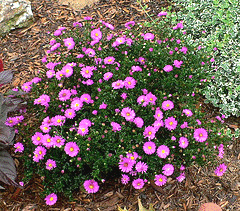
Hardy asters are easy to grow and care for, making them a popular choice for many gardens. They bloom in late summer and fall when other perennials and annuals are fading, adding a nice touch to any garden.
These plants prefer moist, reasonably fertile soil and do not tolerate drought, so it is important to keep them watered during dry periods. Rich soil produces taller plants, and it is recommended to divide them every three years in spring.
Asters are excellent cut flowers, and the Perennial Index lists several varieties. A. x novi-belgii ‘Alert’ has double vivid red-purple blooms with bright yellow centers and is long-living and disease-resistant, although it can be bothered by powdery mildew.
This low-growing perennial has a neat growing habit and is perfect for the front of the border, containers, and cut arrangements. It is hardy in zones 4-8 and has proven hardy in zone 3. It attracts butterflies and is deer-resistant, and it is recommended to allow enough space for good air circulation to reduce the incidence of mildew.
Read more on Asters here.
Astilbe (Astilbe spp)
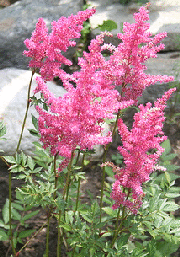
Part shade to shade
Zones 4-8, some to zone 3.
Astilbe is a long-blooming, shade-loving perennial that is hardy in zones 3-4. These plants thrive in moist, shaded areas and have dark green feathery foliage with bright, airy plumes of red, white, or pink in late spring to mid-summer.
Astilbe is ideal for water features that are moist or even very wet, as long as they are shaded. The Chinese species, A. chinensis, can withstand more heat, humidity, and slightly drier conditions and will tolerate sun if well-watered. These plants grow up to 2-3 feet tall and can be propagated by division. Planting them in masses creates a bright drift of color in dark areas.
Astilbe plumes are wonderful in floral arrangements, whether fresh or dried.
Azalea, deciduous (Rhododendron canescens)

Sun-part shade
Zones 4-9.
Azalea is a shade-loving flowering shrub that is frequently used to start the spring perennial show in garden beds. This flowering shrub has spectacular blooming qualities and a wide variety.
Azalea is generally hardy for zones 5-9, but for zone 4, ‘Golden Lights’ is bred to withstand -30 F and is mildew-resistant with golden blooms in late spring. ‘Yaku Princess’ is hard to find and not quite as hardy as ‘Golden Lights’, but it may survive in zone 4 with protection.
Azalea is a shallow-rooted plant that should not be planted too deep. It prefers cool, moist organic soil and is not tolerant of dry periods, so it is important to ensure it gets enough water.
Rhododendrons continue to grow well into autumn and are susceptible to early freeze damage. Watering thoroughly until the ground freezes allows the plant to properly acclimate to winter. Evergreen Azalea and Rhododendron are susceptible to desiccation due to winter winds and lack of moisture.
Applying an anti-transpirant in December and February can help prevent the foliage from drying out, turning brown, and dropping off.
Balloon Flower (Platycodon)

Full sun to part shade
Hardy in zones 3-8
Puffy buds open to bell-shaped flowers with five points of blue, white or pink.
This perennial is slow to break dormancy in spring so be patient, signs of life will not appear until late spring. It grows 18-24” tall, and you should stake the plants before flowering; if they fall over, the stem will break.
They prefer some sun but will tolerate shade. Deadhead to encourage repeat flowering.
Divide clumps in spring or fall, but division is not usually necessary, and should not be disturbed unless necessary after established. The plant is known to reseed, deadheading will reduce seed production.
The balloon flower is a long-living perennial. It will benefit from winter protection in zones 3 and 4, mulching 3-4” thick should do it.
Bee Balm (Monarda)
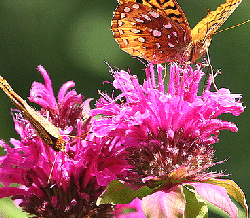
Full sun to part shade
Hardy in zones 3-10.
Monarda is a butterfly magnet. They are easy to grow in fertile soil, but can be susceptible to mildew, so dry conditions in sun is best.
‘Marshall’s Delight’ has spikey globe-shaped pink heads with minty foliage.
‘Gardenview Scarlet’ has red “mophead” flowers and grows to 2-3 feet. Both are mildew resistant.
Most varieties grow to 28-40” tall and bloom in midsummer. They prefer sun but may tolerate some light shade.
Some are hardy to zone 3, and many will survive in zone 3 with protection. They can be invasive, so divide every 2 to 3 years in spring or fall (fall is best), which will also reduce mildew by thinning and increasing air circulation.
Failing to divide may also encourage crown rot. They are drought resistant, but may be short-lived in hot dry regions.
Bellflower (Campanula spp.)
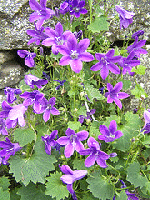
Full sun to part shade
Hardy in zones 3-9.
Campanula is a versatile plant that can tolerate full sun in the north if not allowed to dry out. However, most varieties benefit from some shade, and not all are hardy to zone 3 or 4.
These plants have bell-shaped flowers in blue, blue-purple, or white, and some bloom from spring to fall. There is a range of varieties, from small mounding plants perfect for edging a garden bed to tall back-of-the-border varieties that may need staking.
Propagation is possible by division or seed. Division in fall is ideal, but early spring division is also an option.
C. lactiflora is hardy to zone 4 and blooms from mid-July to September with violet-blue flowers. They enjoy moist shade but can tolerate dry shade.
C. persicifolia blooms white or blue in early summer and is 2-3 feet tall with strong stems. It tolerates dry shade and is easy to grow from seed. Hardy to zone 4, it is very heat and cold-tolerant.
C. poscharskyana has blue blooms, grows to 1 foot or taller, and spreads easily. Commonly known as blue or white clips, they are non-stop bloomers that are excellent for edging a border or in rock gardens. Both blue and white clips self-sow, with blue clips more readily. They are easily divided in spring or fall.
Related read: Campanula Bellflowers
Black-Eyed Susan (Rudbeckia)

Full sun
Hardy in zones 4-9
One of many Rudbeckias, Black-Eyed Susan has striking bright gold daisy blooms from mid summer until frost.
Great for cut flowers. They are very easy to grow and drought tolerant.
They spread easily, be prepared to thin out as necessary. Propogate by division, fall is the best time, but they may be divided in early spring.
They grow 2 to 3 feet tall. See additional Rudbeckias.
Bleeding Heart (Dicentra spp.)
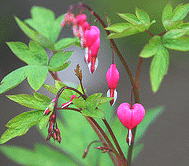
Half to full shade
Zones 3-8 or 9.
The Bleeding Heart, a North American native, thrives in shade and evenly moist soil. It blooms clusters of heart-shaped pendant flowers in pink, rose, or white from mid-spring to summer on arching stems. This plant prefers slightly acidic soil that is moist and rich, so adding some peat moss when planting can help.
Bleeding Heart can be divided in early spring, and the old-fashioned varieties are the most cold-tolerant. The common Bleeding Heart (Dicentra spectabilis) has pink or white flowers and does well in partial shade. It is hardy to zone 2 or 3 with mulching.
King of Hearts has rosy pink flowers off and on all summer. This variety can tolerate near full sun to light shade and is hardy to zone 4. Additionally, Snowdrift, Luxuriant, and Zestful are dwarf varieties.
Related read: Dicentra Bleeding Hearts
Centaurea (Perennial Cornflower)

Full sun
Hardy in zones 3-9
An unusual flower with 2 inch showy blue flowers with spider-like petals, and is long blooming.
Centaurea is one of many varieties of Bachelor Buttons. ‘Montana’ has dark green foliage and flowers in late spring, re-blooming in fall if cut back after the first bloom, and is 2’ high. ‘Gold Bullion’ has bold/chartreuse foliage, is 12-15” high and may also rebloom if cut back promptly.
They need good drainage, and will spread (but not be invasive) best in enriched soil.
‘Gold Bullion’ is striking in small clumps, breathtaking as a ground cover. Centaurea is tolerant of dry conditions.
Plant in sun to light shade. Divide in spring or fall every 2 to 3 years to minimize spreading.
They may be hard to find. Try Wayside Gardens, Bluestone Perennials, or Whiteflower Farms. More info
Clematis

Full Sun, some in light shade
Zones 4-8, some to zone 3
With so few climbers hardy enough for the true northern garden, clematis is a must have.
Selection for zone 4 is excellent, and several are hardy to zone 3, Wayside Gardens even offering a zone 2, Silmakivi Clematis. Also offered by Wayside Gardens is a new miniature, Clematis Bourbon.
At 3-4 feet, it is perfect for containers, with a small pillar or a mail post, or tumbling down a slope. All are long bloomers but start at varying times. Some can tolerate light shade. Height can range from 4-8 feet, for posts, pillar frames or tall arches.
Follow pruning instructions, or you may lose all your next season’s blooms!
Jackmanii hybrid is used widely in the north, an old-fashioned, it is hardy to zone 4, and produces abundant 4 to 7-inch deep purple flowers on new wood. Jackmani should be cut back to a few inches in early spring and remove all vines.
Plant all clematis deep, as much as several inches deeper than they grew in the pot, so the crown is 3 to 4 inches below the soil level. And be sure to keep the roots cool by shading from surrounding plants, and the plant in full sun.
Feel all clematis every 4 to 6 weeks with a 10-10-10 fertilizer, do not use manure around the plant, and do not mulch around the crown to avoid fungus. If your soil is acidic, add a little lime to the soil when planting.
Chrysanthemum
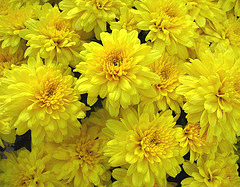
Full sun
Hardy in zones 5-9, some in zone 4
Hundreds of mum species are available, be sure to select one hardy for your zone.
And unknown to most gardeners, blooming mums purchased and planted in the fall do not overwinter well.
They should be planted in the spring so they are well-established over the summer. Even then, mulch heavily at least the first winter, especially in zones 4 and 5.
Leaves of the hardy garden mum are aromatic, and the stems are strong enough to hold the showy flowers.
Decreasing day length initiates the late season blooms. Well-drained, evenly moist soil and full sun is required.
Pinch back frequently until July to encourage a full bushy plant, loaded with blooms. Propagate by cuttings or by division.
Columbine (Aquilegia)
Full sun to part shade
Hardy in zones 3-9.
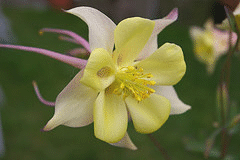
These are graceful flowers with spurs extending from the base of the bloom that attracts butterflies, hummingbirds and resists deer and rabbits.
Pick them when half open for a lovely cut flower. The Latin word aqulinum means “eagle like” - the spurs of the bloom suggesting talons of an eagle. However, not all cultivars have spurs.
When grown in zones 9 and 10, columbine must have shade to survive. In zone 3, winter protection of heavy mulch is advised.
Plant Aquilegia where the exquisitely unusual blooms can be viewed close up. The plant itself can become somewhat unattractive late in summer, so combine them with low growing greenery so the blooms rise above for a lovely display.
Aquilegia is available in single or bi-colors in red, yellow, blue, or white, as well as single and double blooms. Be aware that most varieties self-seed. They are very adaptable and easy to grow in average well-drained soil.
Columbine will not tolerate heavy, poorly drained soil. To maintain attractive foliage, the soil must be kept uniformly moist. When the foliage does become ragged, cut to the ground. Columbine is often referred to as Granny’s Bonnet. Several varieties are detailed in the Perennial Index. More info
Aquilegia ‘McKana Hybrids’ are the standard by which all other aquilegia are judged. They are medium to tall, up to 30”, with a wide range of colors available. Colors tend to be pastel but some are bright, all are certainly colorful.
The blooms have long spurs, are nodding, and are bi-colored. They typically bloom in April and May. The foliage is gray-green with a clump-forming habit.
Coneflower (Echinacea)

Full sun
Hardy in zones 3-9
This North American native comes from the daisy family. Droopy daisy-like flowers are produced from late June until frost, in bright colors.
It is very easy to grow, requiring only ordinary soil, and is quite tolerant of heat, drought, cold and poor soil. Cut flowers are long-lasting, or left on the plant, the cone in the flowerhead supplies nourishment for birds.
E. pupurea is a rugged species, ‘Fragrant Angel’ is hardy to zone 3. One of the few fragrant Coneflowers, it has double rows of white petals held horizontally. Strong branches make great bouquets.
‘Coconut Lime’ is also hardy in zone 3, a double flowering white bloom has large flower heads with a row of white petals surrounding a lime green pompom cone of lime green. Propagate by division in the fall. Several varieties are detailed in the perennial index. More info
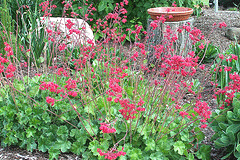
Coral Bells: (Heuchera sanguinea)
Sun to full shade
Hardy in zones 4-9
There are many varieties, all with dainty bell-shaped flowers on long stems, and new hybrids with a bronzy foliage.
Many varieties have foliage in interesting colors and or textures and grow in neat mounds from 12 to 18”.
Most prefer light shade, some prefer sun, especially in the north. Plant in moist but well drained, organically enriched soil.
Coral bells are resistant to disease, drought and pests.
‘Crimson Curls’ is long blooming with cream flowers atop the curliest purply color leaves. This one is hardy to zone 3.
Coreopsis

Full sun
Hardy in zones 3-9, some to zone 2.
Coreopsis is a bright and cheery perennial that blooms all summer. They are very easy to grow in well drained soil. Hot, dry conditions don’t bother coreopsis at all.
Cut back after the first bloom to encourage continued blooming. ‘Moonbeam’ has pale yellow flowers produced profusely all summer, floating atop delicate foliage. After flowering is finished, cut back all the stems to a nice foliage mound.
‘Moonbeam’ is hardy to zone 3. The new ‘Jethro Tull’ has very unique flower petals. They are produced as a “tube” and notched in bright yellow.
Flowers are produced all summer, deadhead to encourage flowering. Propagate by division in fall. It is hardy to zone 5. Several varieties are detailed in the Perennial Index. More info
Daylilies (Hemerocallis)
Full sun to part shade
Hardy in zones 3-9.
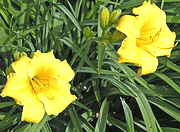
Here’s an old fashioned, super hardy favorite that just keeps getting better and better. Evergreen varieties are hardy to zone 4, all others easily to zone 3.
They are easy to grow in good well drained soil, but is very tolerant of neglect, heat and dry conditions, and even poor soil Daylily does not do well id soil is perpetually wet, and prefers full sun or some shade. A full day of sun will produce the most blooms. Only reblooming varieties need to be deadheaded.
The bright and cheery ‘Stella de Oro’ has become a staple in gardens and landscapes. A little fertilizer in spring and fall is all they need, but will manage fine if you forget.
Do not remove leaves until completely brown, or wait until spring. Divide clumps in spring or fall, every 2 or 3 years.
Delphinium:
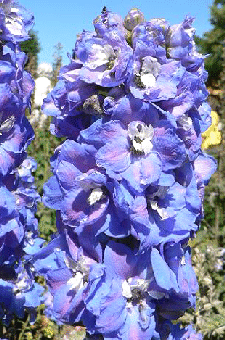
Full sun
Hardy in zones 3-7
Striking spires of vivid blue or white flowers and now some new pinks. Results in the garden can vary.
They are billed as deer resistant, long-living, long blooming, and with strong stalks. In some cases, all is true. In some cases, they are rapidly devoured by deer, live as little as 2 years, bloom a few to several weeks, and again if cut back after the first bloom, and are lying on your garden floor after a good rain.
These are such gorgeous plants it is well worth the search for the one that will thrive and stand strong in your garden (try ‘delphinium elatum’ instead of ‘Pacific Giant’).
Plant in a sunny spot, sheltered from wind may help, and in good, organically enriched soil Then, feed them heavily up to bloom time and again after cutting back. Divide every 2 to 4 years to preserve its health.
Protect from deer if necessary. Some varieties hardy to zones 3 and 4. See details in the Perennial Index
Ferns
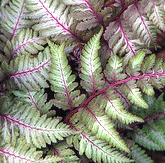
Part to full shade, some in full sun
Hardy in zones 3-9.
There are hundreds of species of hardy ferns. Ferns can add light and airy texture and color to your shade garden.
Foliage in silvery whites to bright limes adds easy color to an otherwise dark spot.
They prefer well-drained, organic soil, slightly acidic. Mulching will help maintain consistent moisture.
Gaillardia (blanket flower)

Full sun
Hardy in zones 3-10
This is a tough, hardy perennial with daisy-like flowers and makes a great cutting flower. T
hey bloom from June through September and thet tolerate drought and poor soil, and are deer resistant.
Deadhead religiously to prevent prolific self-seeding. Grows to 12-15” in nice bunches. Some gaillardia are annuals. More Info
Geranium, hardy (Crane’s bill)
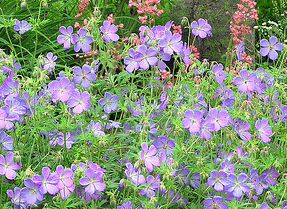
Sun to part shade
Hardy in zones 3-8
This is not the hothouse annual! There are many cultivars. All have mounded foliage with cup-shaped flowers.
Most are long bloomers, and some self-seed (watch for tiny plants to pop up, to either remove or plant elsewhere).
Full sun is preferred, but some can tolerate light shade, especially further south.
The cultivar Rozanne is very tolerant of heat and humidity and has one of the longest bloom seasons of the Crane’s bills.
It is also very compact, making it a great choice for containers and garden borders. Winter protection is suggested in zones 3 and 4, use 3-4 inches of mulch. More info
Hosta
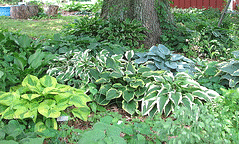
Part to full shade
Hardy in zones 3-7
Where to begin?
There is such a large variety, over seventy species with hundreds of crossbreeds and with a broad range of hardiness.
They are easy to grow and provide a variety of foliage colors and textures for the shade garden.
Tall stems shoot up in late spring to support lily-like flowers of white or shades of blue. Propagate by division in fall.
Iris
Full sun to part shade
Hardy in zones 3-9
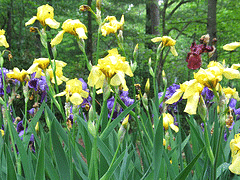
There is an iris for every garden. Over 200 species offer just about unlimited choices for color, sun or light shade, dry soil or water garden, dainty or bold.
When not in bloom, the spiky foliage is a nice contrast to leafy plants in the garden. For a dramatic look, plant your iris in groups of 3 to 7 of the same variety 18-24” apart and with the leaf fans all in one direction.
Don’t count on re-blooming varieties to actually re-bloom in the north, but deadheading will help. Also, apply a light dose of fertilizer after the first bloom is finished, and water well during summer dry spells.
New fans will appear, and if your growing season is long enough with a warm autumn, the flower spikes may develop and appear. Where the weather cooperates in zones 5 and warmer, re-bloom is in late summer or fall.
In zones 3 and 4, plant re-bloomers in a sheltered sunny spot may encourage re-blooming. Dig up and divide every few years in the fall to keep healthy.
Iris prefers a near-neutral pH and well-drained soil. Over-watering may cause the rhizomes to rot, and wet periods may cause leaf spot fungus.
Spray with a copper-based fungicide to control. If you had trouble with iris borers, after the first hard frost, clean up all old iris plant material and burn or dispose of it.
You may want to apply an insecticide in spring when the plants are about 4 inches high if you have had a persistent problem. Use Demethoate, and apply again in 14 days.
Lady’s Mantle (Alchemmilla)
Part shade to full sun
Zones 3-7.
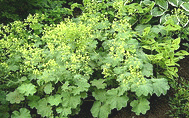
Lady’s Mantle has large gray-green leaves with dainty star-shaped yellow-green flower clusters in early summer to early fall.
Northern gardeners should plant in full sun, and protect with mulch in zone 3. Drought tolerant. More info
Lavender (Lavandula)
Full sun
Hardy in zones 5-9
The “true” or common English lavender is the species angustifolia, but there are many others that are similar in the family.
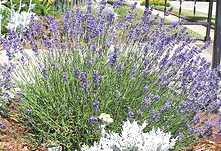
A highly fragrant, hardy native perennial that is very drought tolerant. The plants are rather shrubby but compact, with silvery green foliage and slender flower spikes of blue or purple in summer. Many are only hardy to zones 6 or 7.
These “true” lavenders are the sweetest smelling of lavenders. Lavandula stems are used as herbs, dried flowers are used as potpourri and as medicinal teas, and oils are used in aromatherapy.
All prefer full sun and dry soil, and are heat and drought resistant. The fragrant flowers attract butterflies and are excellent for cut and dried arrangements.
Harvest the blooms when in the fresh bud and dry them by hanging them in a warm shady place. More info
Lily of the Valley (Convaflaria majatis)
Part shade to shade
Zones 2-7
A classic perennial that is a highly useful groundcover for shade.
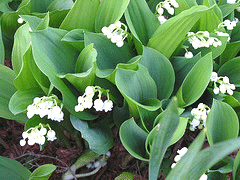
The sweet-scented lily of the valley produces masses of bright white bells, brightening a shady spot. easy to care for, long-lived, and spreads readily.
‘Bordeaux’ is improved, with more and larger blooms dangling above the foliage rather than among it. ‘Bordeaux’ is also hardy to zone 2.
Lungwort (Pulmonaria spp.)
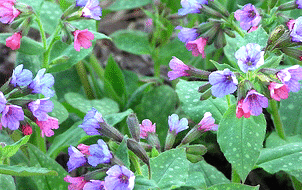
Part shade to shade
Hardy in zones 3-7
Lungwort is easy to grow, and perfect in a low light bed. They spread slowly to form a ground cover but is never aggressive.
Plant in rich soil with organic matter in a spot that stays moist but not wet. Bright blooms of pink, blue or white appear in April and May. After blooming, cut off old leaves so fresh leaves are produced for the rest of the season.
Plants tend to be slug-resistant, disease-resistant and deer resistant.
Feed in early spring as soon as the flowering has stopped and twice more during the summer to keep the plant vigorous.
Lungwort is dependable and easy to grow, requiring very little care.
Divide in fall every 3 - 5 years to keep lungwort healthy. More info
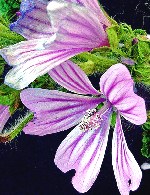
Mallow (Malva)
Full sun to part shade
Hardy in zones 3-8.
Mallow grows quickly, self-seeds, and requires very little attention. It blooms floriferously and repeatedly in pale pinks, white or blue.
The masses of blooms persist from early summer to early fall. Generally only hardy to zones 4 or 5, but may be hardy in zones 3 or 4 when heavily protected and planted in a sheltered, warm winter spot.
Nepeta (Catmint)
Full sun to part shade
Hardy in zones 3-8.
A member of the mint family, certain varieties are very attractive to cats, inducing a temporary euphoric state.
As for gardening, ‘Catmint’ is a very easy-to-grow, drought-tolerant, flowering perennial with few problems or pests.
Nepeta is often used instead of lavender, which is not nearly as hardy.
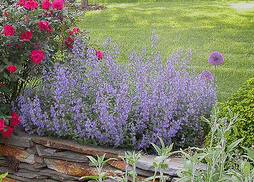
‘Walker’s Low’ is named for a garden in England, not for its height. It grows as high as 30” and can spread to 3 feet wide. Lavender blue flowers bloom profusely in early summer, as early as April or May in warmer climates, and then sporadically until frost. Sheering after the first heavy blooming will encourage another bloom, but the plant will not reach 30”. Sheering will also keep the foliage neat and fresh. Foliage is a soft gray green. The spicy scent is a nice addition to a vase of cut flowers, or in potpourri. In addition to attracting cats, ‘Walker’s Low’ will attract bees, hummingbirds and butterflies. Deer and rabbits are indifferent to the plant, being scented and gray foliage. ‘Walker’s Low’ is hardy enough for zone 4 and will tolerate sandy soil, salt, humidity and drought. Seeds are sterile, so this perennial must be propagated by division.
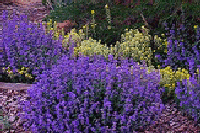
‘Blue Wonder’ is a dwarf catnip with a mounding, bushy habit that reaches only about 12” tall with a spread of 12 - 24”. Dark blue blooms are small but abundant along 6” flower spikes. The bloom season is long, usually from May through September. Aromatic foliage is gray green. ‘Blue Wonder’ is hardy from zones 3 to 8, but does not do well in the heat and humidity of the deep south. Afternoon shade will benefit the plant in hot climates. It will thrive in dry soil in full sun. Of course bees, butterflies and hummingbirds are attracted to this aromatic plant, but is not bothered by deer or rabbits. Seeds are sterile, propagate this perennial by division.
Penstemon (Bearded Tongue)
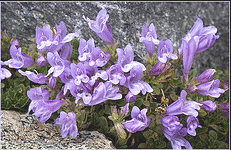
Full sun to part shade
Zones 3-9
A North American native, this hardy perennial is very drought tolerant.
Prolific flowering in spring or summer in brilliant blues, lavenders, pinks or red. Very tolerant of moist conditions except very wet, it does best in dry, sunny, very well-drained or sandy soils.
They generally grow to 12-14” high.
Penstemon attracts butterflies and hummingbirds. Some are hardy to zone 3 (‘Sweet Grapes’), but many varieties are only hardy to zone 6.
‘Sweet Grapes’ is lower growing at about 6” and prefers full sun. It is tolerant of drought and poor soil. Prolific lavender blooms on five-inch stems appear through midsummer. More info
Peonies
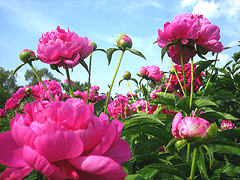
Full sun to part shade
Hardy in zones 3-8
Spectacular plump cabbage rose-like flowers are the first lush look of summer.
The speed at which these plants rise from beneath the soil and produce masses of flowers is utterly amazing, and when they are done blooming, you have a beautifully mounded, dark rich green “shrub”, that always looks glossy and healthy.
Plant if the fall (late August or September) in a sunny spot, in soil enriched with compost. Don’t plant too close to other shrubs or trees, where roots will interfere. And do not plant too deep or flower production will be retarded.
The pink “eyes” of the root should never be more than 2 inches below the surface, one inch in clay soils. Once established, little or no care is required, and you will be rewarded with blooms for a lifetime.
Divide in fall (late August or September) every 15 to 30 years for the health of the plant, or divide more frequently to produce additional plants. Each division should have 3 to 5 “eyes”, the reddish buds on the tubers. This super hardy perennial is hardy to zone 3.
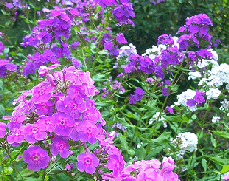
Phlox paniculata hybrids
Full sun
Hardy in zones 3-9
Indispensable in the perennial garden, there continues to be more color selection available, from white, through pinks and purples, and on to reds and coral.
Tall, leafed stems are topped with large clusters of showy flowers. Phlox grows and spreads easily, prefers good well drained soil in the sun, but doesn’t seem to mind poor soil or neglect too much. Tall garden Phlox does best in full sun, which helps to produce larger blooms and stronger stems.
They will tolerate hot, dry weather nicely and light shade.
Phlox is susceptible to powdery mildew; take care to water early in the day or with a drip method.
Propagate by division in the fall. Generally hardy to zone 4, some to zone 3. More info
Phlox subulata (creeping phlox)
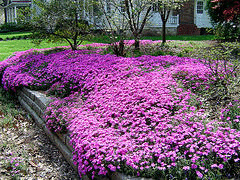
Part to full sun
Hardy in zones 3 - 9
Creeping phlox is a short groundcover perennial that is widely used in rock gardens, on slopes, along paths, and spilling over garden walls.
It grows and spreads slowly, forming a dense mat. Mature size is usually about 6” tall and 2 feet wide.
Like tall garden phlox, it prefers moist, well-drained soil that is slightly alkaline. They both will tolerate poorer and dry soils as well as slightly acidic conditions.
Each spring after flowering, the plants should be sheared back about one-third to one-half to renew vigor and to reduce the large top growth that a shallow root system is trying to support.
Phlox subulata is evergreen, however, in zones 3 and 4, it should be covered (evergreen boughs or reliable snow cover).
A show-stopping carpet of color is produced in late April or early May. To help extend bloom time, fertilize in early spring just after the plant tips begin to emerge from the soil.
Sprinkle a granular timed release of 9-12-12 fertilizer into the soil and mulch over. After two to three weeks of blooming, fertilize again, but do not sprinkle directly onto the plants, or you may burn them. Pull/rake back the mulch and sprinkle it into the soil, then replace the mulch. Water well. More info
Pinks (Dianthus)
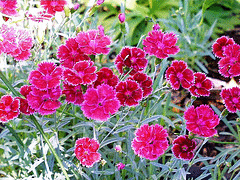
Part to full sun
Hardy in zones 3-8**
Cottage garden pinks are excellent low-growing, prolific bloomers for the front of a border, rock garden, or edging.
Many varieties are hardy to zone 3 or 4. Some self-seed. Pay careful attention when selecting dianthus - some are hardy perennials, some are biennials, and some are annuals in the northern garden.
‘Bath’s Pink’ is the northern garden’s favorite and is hardy to zone 3. Clove-scented pink blooms cover the plant all summer.
‘Heart Attack’, a perennial Sweet William Dianthus, is hardy to zone 4, living 5 years or more, but Sweet William ‘Crimson Velvet’ is a biennial.
Dianthus Desmond is hardy to zone 5 and Cranberry Ice to zone 3. Dianthus chinensis is an annual. Carnations are also part of the Dianthus family, some are hardy and some are not. CONFUSING! be careful.
Look for Dianthus plumarius, and ask at the garden center if the hardiness is not well labeled. Annual and perennial varieties should be in separate sections, which helps. More info
Poppies (Papaver oreintale)
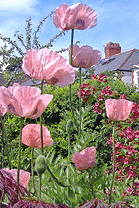
Full sun
Hardy in zones 3-8.
Perennial poppies have recently become popular in the north and midwest. Lavishly blooming in May and June, the 5-8” blooms are available in pinks, plum, red, whites and creams.
They can grow well in nearly any soil, but do prefer rich loam. Make sure they get enough water in dry spells, and that is about all you need to do.
They should be hardy to zone 3 and easy to grow, but I believe the jury is still out on those questions. Gorgeous blooms if they work out well in your garden.
Rudbeckia

Full to part sun
Hardy in zones
Commonly referred to as Coneflower or Black Eyed Susan, the genus and species are quite broad and not that simple.
‘Black Eyed Susan’ for example is a species in the Rudbeckia genus, and there are many cultivars within the ‘Black Eyed Susan’ species.
Most are known for their long blooming period. Whichever perennial Rudbeckia you select for your gardens, you can expect a tough, native perennial that withstands a wide range of conditions and neglect.
Some cultivars are bienniel (self seeding) or annual. More info
Russian Sage (Perovskia)
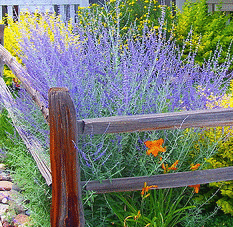
Full sun to light shade
Hardy in zones 3-9.
Aromatic silvery-blue stalks with tiny lavender flowers from mid to late summer.
It grows to 3-4’ in a nice shrub form, and tolerates heat and drought, perfect for dry soil.
Excellent for neglected areas, such as roadside plantings where the sprinklers won’t reach. Also sets a nice cooling backdrop for bright warm colored flowers, especially reds and orange.
‘Filigran’ is the hardiest, to zone 3. It is elegant with feathery dense foliage, and with the strongest upright stalks.
‘Blue Spires’ has wonderful dark blue flowers all summer and is hardy to zone 3. Rabbits and deer don’t care for Russian Sage, but bees love it.
It spreads by seed and underground runners. Cut plant back to the ground sometime between late fall and early spring.
Salvia
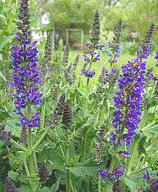
Full sun to part shade
Hardy in zones 3-9
Salvia is an easy to grow hardy perennial that is heat and drought tolerant.
It is long blooming, generally midsummer to early fall. Brilliant spires are covered with mini-flowers in rosy or lavender pinks, or blues and purples grow anywhere from 18” to 4 or 5 feet tall.
Cut back after the blooms fade and keep them watered for another bloom. Cut back to the ground in very early spring, and divide every few years as needed to control size.
Sedum (Stonecrop)
Full sun
Hardy in zones 3-8.
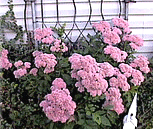
One of the easiest perennials to care for, Sedum is tolerant of heat, humidity, drought and neglect.
When not in bloom, the plant adds interest to rock gardens or a sunny perennial border. Each variety has interesting foliage characteristics: brown/burgundy leaves; or bright gold spiky stems; or large purply black leaves.
Most bloom in summer, ‘Autumn Joy’ blooms in fall with more traditionally colored green foliage.
With well-drained soil, sedum lives a very long life. Divide every 3 to 5 years to discourage crown rot. See more
Spotted Dead Nettle, or Lamium (Lamium maculaturm)
Part to full shade
Hardy in zones 3-8
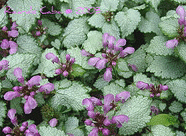
A vigorous growing ground cover reaching only about 10” high.
It blooms in pink, purple or white in late spring to early summer.
‘Beacon Silver’ has silvery foliage with green edges and pink flowers. Lamium needs evenly moist well-drained soil.
It does not like poor soil, wet soil, clay or compacted soil, heat, drought or sun. Lovely, if you have the right spot.
Veronica (Speedwell)
Sun to part sun
Hardy in zones 3-9
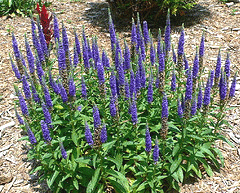
Plentiful spiky blooms, displaying best color in sun, but will do fine in light shade.
Veronica is one of the most trouble free hardy perennials, with beautiful plants when not in bloom.
Varieties range from short ground covers to tall back-of-the-border plants. Very long living when grown in well-drained soil and sun, and is very resistant to drought, insects and disease.
Most are hardy to zones 3 or 4, but some only to zone 6.
Yarrow (Achillea)

Full sun
Hardy in zones 3-8
There are many varieties and colors of yarrow with a wide range of characteristics. Some spread aggressively, some are bienniel.
They are sun loving, hardy perennials with long bloom times. Carefully selected, they are a wonderful addition to the perennial garden, excellent for drying or accenting floral arrangements.
Achillea is a drought tolerant plant and should not be ground in moist conditions. Rich soil, moist conditions and part shade may cause the usually strong stems to flop over.
Resistance to salt also makes yarrow and excellent choice for roadside plantings. More info