redflowerbuttonredflowerbutton

When to Plant Bulbs

Google
 

When to plant spring flowering bulbs depends on your growing zone
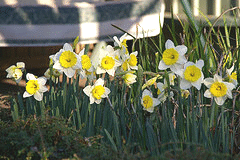
Spring daffodils by Percita

Here is a rule of thumb quick reference for planting spring flowering bulbs:

                Zone 1     Early September

                Zone 2     Early September

                Zone 3     September

                Zone 4     Late September to early October

                Zone 5     Late September to early October

                Zone 6     Mid October

                Zone 7     Early November

                Zone 8     Early November

                Zone 9     Early December

                Zone 10    Mid December

These guidelines are usually pretty safe to plan on planting spring flowering bulbs, but the arrival of winter in the northern and midwest zones is unpredictable. So be mindful of these details to adjust your planting plans:

    Spring blooming bulbs must be established before beginning their required cold, dormancy. Roots will quickly develop from the bottom, and a little later stems will sprout from the tops. (Spring blooming bulbs for zones 9 & 10 do not require a cold period.)

    Avoid, if possible, planting when there is still good possibility of a long enough warm spell for the stems to sprout from the soil. If air and soil temperatures are cold enough, the stem sprout will grow only until just below the surface and stop when the soil temperature is further reduced by freezing temperatures. 

    Spring bulbs can be planted once night temperatures are consistently between 40 and 50 degrees F, but before the first hard frost. The soil will be cool enough for optimal rooting.

    Bulbs should be planted about six weeks before the ground freezes. Bulbs that have had enough time to root will also have gone through a natural process that prevents them from freezing.

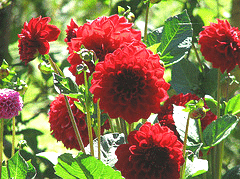
After the ground freezes apply 2 - 4 inches of mulch to maintain a more consistent soil temperature. The mulch will also prevent rapid thaw/freeze cycles in early spring, which can heave your bulbs up out of the ground. If your region experiences climate extremes or rapid changes, such as around the Great Lakes or the Northern zones 1 - 3, you may want to choose later blooming bulbs that may not be affected by late freezes.Dahlia garden

Planting Summer Blooming Bulbs

Summer blooming bulbs, which include rhizomes, corms, tubers and tuberous root plants, can be planted in spring once the soil begins to warm. The hardier summer blooming bulbs such as iris and daylily can be planted fairly early and not be bothered by cool soil. Tender bulbs, like begonias, dahlias, gladiolus, the tropical cannas and caladiums, will prefer to wait until later spring when the soil is quite warm.


Planting Fall Blooming Bulbs
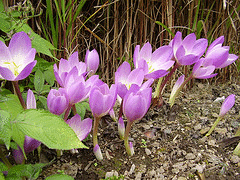
Fall blooming bulbs can be planted in late summer to early autumn. Many will bloom the first fall and overwinter in the ground. Some will produce their foliage in the spring and blooms in the fall. Autumn crocus and some varieties of Colchicum are hardy to zone 5.

Autumn Crocus

Top of Page

Next Page Selecting Bulbs                                                Previous Page Bulbs Introduction

When to Plant Bulbs 10/09

[Home Page] [Info & Articles] [How Far Apart] [Fall Planting] [Preparing Plants for Winter] [Preparing Shrubs and Perennials for Winter] [Preparing Evergreens for Winter] [Protecting Plants from Winter Pests] [Preparing the Lawn for Winter] [What to do in Winter] [Force Bulbs in Winter] [Terms and Definitions] [Quick Tips] [Deadheading] [Hakuro-nishiki Dappled Willow] [Soil Amendments] [Lawn and Garden Chores] [The Scoop on Mail Order Plants] [Poisonous Plants] [Designing a Landscape] [Designing the Garden Style] [Designing the Gardens] [Designing with Plants and Color] [Annuals] [Best Performing Annuals] [Container Gardening] [Winter Containers] [Bulbs] [When to Plant Bulbs] [Selecting Bulbs] [Design with Bulbs] [Planting Bulbs] [Caring for bulbs] [Storing Tender Bulbs] [Tulips] [Perennials] [Long Blooms Long Life] [Best Performing Perennials A-C] [Best Performing Perennials D-M] [Best Performing Perennials N-Z] [Perennial Ornamental Grasses] [Best Perennial Ornamental Grasses] [Dividing Perennials] [Tucking in for Winter] [Growing Roses in Cold Climates] [Selecting Rose Bushes] [Roses in Shade] [Roses for Shade] [Winter Protect Roses] [Protection Methods] [Ideas for Roses] [Container Roses] [Tree Roses] [Planting a Tree Rose] [Rose Tree Care] [Winter Protect Standards] [Hardy Roses for Midwest Gardens] [Rugosa Roses] [Explorer Roses] [Parkland Roses] [Knock Out Roses] [Fairy Roses, Polyantha] [Polyantha Roses] [Simplicity Roses] [Easy Elegance Roses] [Easy Elegance Care and Pruning] [Sub-Zero Tea Roses] [Floribunda Roses A-I] [Floribunda Roses J-Z] [Grandiflora and Tea Roses] [Rose Disease and Insects] [Pruning Roses] [Transplanting Roses] [Shrubs for Northern Gardens] [Planning and Selecting Shrubs] [Shrubs for Moist Soil/Shrubs for Shade] [Best Performing Shrubs] [Best Performing Shrubs C-H] [Best Performing Shrubs I-R] [Best Performing Shrubs S-Z] [Pruning Shrubs] [Pruning Specific Shrub Varieties] [Trees] [Planting a Tree] [Planting a Tree Special Instructions] [Pruning Ornamental Trees] [Pruning Specific Tree Varieties] [Small Trees] [Shade Tree, Maples] [Seedless Maples] [Red Maples] [Sugar Maples] [Norway Maples] [Silver Maples] [Bigtooth Maple] [Black Maple] [Small Maples] [Japanese Maples] [Shade Trees, Oak] [White Oak] [Pin Oak] [Bur Oak] [Northern Red Oak] [Shingle Oak] [Shade Trees, Elm] [American Elm] [North American Hybrid Elms] [SiteMap] [Home Page]
PROSites