Japanese Maple Trees
Commonly referred to as Japanese Maples, these small ornamentals are actually native to Japan, China and Korea.
Small ornamental trees benefit from spring fertilization. Use a slow release granular fertilizer with equal parts NPK (nitrogen, phosphorous and potassium). Sprinkle around the root zone according to directions in spring.
The most common of these maples are the Acer palmatum Japanese Maples. This species alone is quite enormous with at least three subspecies, hundreds of named cultivars, and perhaps a thousand or more total cultivars that include small ornamental trees as well as shrubs. There is a good deal of variation even from parent to sibling, so if you seek a very specific tree, make sure that you are purchasing a named cultivar, and prepare to be flexible about the results. But each Japanese Maples displays such unique beauty, it would be hard to be dissatisfied. A small selection of the available varieties will give you a start.
Acer palmatum Japanese Maple

Zones: 5-8
Light Dappled Shade (varies by variety)
Height: 15-25’ (varies by variety)
Spread: 10-25’ (varies by variety)
Shape: Often a low dense rounded top with spreading branches. Frequently displays a layered look.
Growth Rate: Slow to Moderate (varies by variety)
Soil preference: Evenly moist well drained

Moisture: Evenly moist, does not tolerate drought.
Foliage: Green in summer
Blooms: Small red to purple flowers, insignificant at a distance
Fruit: Many produce double winged samaras

Japanese Maples prefer a dappled shade in an area protected from wind. Leaf scorch will be caused by excess sun, wind or drought. Most are somewhat adaptable to sun and soil conditions. Japanese Maples can be grown as a single stem or multi stem tree, and may display a variety of crown forms from open and layered to dense and cascading. Will often become shrub like if unpruned. Fall color can be yellow, bronzed, purple or red, or a combination. Leaf color can vary quite dramatically by variety ranging from chartreuse to purple. Selections are often made based on fall leaf color and leaf appearance.
Species similar to Acer palmatum include:
Acer japonicum Downy Japanese Maple
Acer pseudosieboldianum Korean Maple
Acer sieboldianum Siebold’s Maple
Acer palmatum ‘Atropurpureum

Zones: 5-8
Full Sun in northern zones, to Shade
Height: 15-25’
Spread: 15-25’
Shape: Broad crown at maturity, upright habit
Growth Rate: Slow
Soil Preference: Prefers slightly acidic to neutral pH 6.5 - 7, well drained fertil soil.
Moisture: Prefers average to moist soil, moderately tolerant of drought. Does not do well in wet.
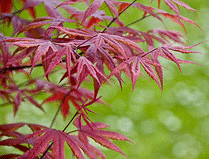
Foliage: Deeply lobed palmate leaves with serrated edges emerge red in spring, maturing to a mahagony purple through summer. In early autumn, the leaves briefly turn green before turning red, then finally a fiery red in late autumn.
Blooms: Red spring flowers
Fruit: Showy red and yellow seeds
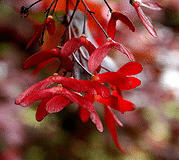
‘Atropurpureum’ is a naturally occuring variety of Japanese Maple and is used in hybridizing many cultivars, including ‘Bloodgood’. One of the more commonly grown Japanese Maples, in is often referred to simply as Red Japanese Maple. It is easily grown requiring little maintenance, and resists pests and disease. ‘Atropurpureum will do well in varying degrees of shade. Small nodding red flowers in spring give way to colorful pink and yellow double samaras, which do not drop until the leaves begin to drop in autumn.
Acer palmatum ‘Bloodgood’
Zones: 5B-8
Full Sun in northern zones, to Shade
Height: 12-20’
Spread: 15-20’
Shape: Rounded crown, symmetrical habit is consistent in each individual plant.
Growth Rate: Slow
Soil Preference: Prefers slightly alkaline to acidic, will do well in clay, sand or loam. Is moderately tolerant of salt soils.
Moisture: Prefers average to moist soil, moderately tolerant of drought. Does not do well in wet.

Foliage: Star shaped palmate leaves with serrated edges colored purple or red.
Blooms: Red spring flowers
Fruit: Showy red seeds

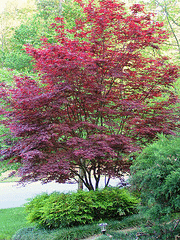
‘Bloodgood’ is one of the more widely used Japanese Maples because of it’s red summer color, reddish bark and showy scarlet fall color. Leaves turn green red in the heat of summer in southern regions. It is a beautiful specimen tree for residential landscapes. Multiple trunks lend a lovely silhouette, especially when lit at night. Lower branches can be removed up the trunk base or left in shrub form, displaying a rounded canopy. Thin interior branches to eliminate crossed or touching branches keeping snipped as they sprout. You may also prune the crown to control size. ‘Bloodgood’ grows vigorously with strong branches. Interesting winter form, bark and persistent seeds. Planting in a raised bed will eliminate the possibility of wet soil. Can be planted year round in zones 7 and 8. Does not transplant well, but container grown and root pruned plants will do fine. ‘Bloodgood’ is an improved cultivar of ‘Atropurpureum’.
Acer palmatum ‘Butterfly’

Zones: 5-8
Morning Sun with Afternoon Shade, or Shade
Height: 12-15’
Spread: 6-8’
Shape: Upright, Vase shaped
Growth Rate: Very slow
Soil Preference:
Moisture: Average, moist well drained
Foliage: Variegated small leaves, green with white margins in spring, maturing to bluish green with cream variegation and sometimes rose red.
Blooms: Small creamy pink flowers in spring
Fruit: Samaras

‘Butterfly’ is an easy to grow and dependable variegated Japanese Maple. The small fine leaves present a delicate lacy appearance. Branches are often layered or slightly weeping. Often tends toward a shrubby form, but may be pruned to maintain a tree form (removal of lower branches) and thinned to accentuate layering. In warm climates plant where it will receive morning sun but afternoon shade for best results. For more northern zones light shade will be adaquate and will do well in heavier shade. Also avoid areas exposed to winter winds in the north. Will grow well in large pots as a patio tree or near a water garden. Autumn color is a striking red purple.
Acer palmatum ‘Osakazuki’

Zones: 5-9
Sun to Shade
Height: 15-25’, perhaps as tall as 30’
Spread: 15-20’
Shape: Rounded, grows more rounded as it matures
Growth Rate: Grows rapidly when young
Soil Preference: Acidic well drained.
Moisture: Average, drought tolerant
Foliage: 5” leaves with 7 lobes are larger than the average Japanese Maple leaf, coloring can vary. Typically leaves are rich green in summer, crimson red in autumn
Blooms: Showy red flowers in spring
Fruit: Showy red samaras
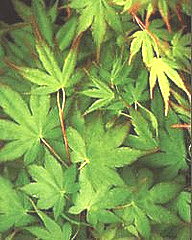
There are at least a few different forms of ‘Osakazuki’ which may display different leaf colorings in both summer and fall. This is one of those cases where you will want to select carefully if you are particular about color display. Most should display vivid red fall color. ‘Osakazuki’ is very hardy, withstanding cold winters and heavy snow, as well as hot desert temperatures. May be difficult to find, stock often runs out quickly.
Acer plamatum ‘Fireglow’

Zones:5-9
Sun to Part Shade
Height: 10-15’ perhaps up to 25’
Spread: 10-12’
Shape: Upright and vase shaped
Growth Rate: Slow, may be only 12’ in 30 years. Grows quickly when young, perhaps up to 10” per year.
Soil Preference: Moist well drained. Prefers hums rich with pH levels from mildly alkaline to strongly acidic.
Moisture: Average, water regularly buyt do not overwater
Foliage: Leaves are intensely red purple
Blooms: None
Seeds: None
‘Fireglow’ holds it’s deep wine red leaf color well through the heat of summer. Coloring may tend more green in shade. Leaves turn crimson in autumn. ‘Fireglow’ tends to be more shrub like when young, but well develop a better tree form as it matures. May require maintenance pruning for desired form.
Acer palmatum ‘Sango Kaku’ Coral bark Japanese Maple

Zones: 6-8
Sun to Light Shade
Height: 20-25’
Spread: 15-20’
Shape: Rounded
Growth Rate: Slow to Moderate
Soil Preference: Will tolerate from sand to heavy clay
Moisture: Moist, well drained, drought tolerant
Foliage: Palmate leaves with 5-7 narrow, sharp pointed lobes. New leaves are reddish, medium green in summer
Blooms: None or insignigicant
Fruit: None

Young stems display brilliant coral color in fall and winter. Foliage turns yellow gold with light red tones in autumn. Will do well in large containers. ‘Sango Kaku’ may not be as heat tolerant as some cultivars. Protect in shadier areas for southern zones. Also does not tolerate wind well. Susceptible to bacterial blight, plant where air circulation is good to help prevent the problem.
Acer palmatum var dissectum ’Seiryu’ Japanese Maple

Zones: 5-9
Full Sun to Part Shade, prefers lightly dappled shade
Height: 15-20’
Spread: 12’
Shape: Upright
Growth Rate: Moderate, up to one foot per year
Soil Preference: Organically enriched, well drained, pH 5.8 - 6.5
Moisture: Average

Foliage: Finely cut palmate leaves have 7 lobes and are deeply dissected. Leaves open bright green with reddish tones, light green in summer, turning gold-orange in fall then quickly to brillian red.
Blooms: Inconspicuous purple-red flowers in spring
Fruit: None

‘Seiryu’ grows unexpectedly upright, growing rather quickly for a Japanese Maple. The crown is somewhat more dense then many of the open and airy crowns of Japanese Maple. As the tree develops it becomes multi-branched. When ‘Seiryu’ has matured, interior branches may die for lack of sunlight, prune them out. Occasional interior p r u n i n g t o open up the crown will expose the beautiful structure of the tree. Water regularly, especially in extreme heat and until well established, but do not allow the soil to become soggy. One of the last trees in the landscape to turn color in autumn, the change is rapid. An early hard freeze may prevent the leaves from turning. Will benefit from afternoon shade in warmer climates, but can handle full sun in the north. Plant in an area protected from wind. Excellent specimen for small spaces including containers. The bright, light green foliage pairs well with deep purple or mahagony perennials or shrubs
Acer palmatum var dissectum ‘Crimson Queen’
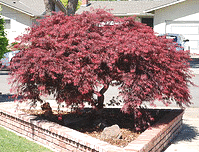
Zones: 5-8
Full Sun to Part Shade, prefers lightly dappled shade
Height: 8-10’
Spread: 10-12’
Shape: Mounded, cascading
Growth Rate:
Soil Preference: Average soil, well drained
Moisture: Average
Foliage: Finely cut palmate leaves have 7-9 lobes and are deeply dissected. Leaves open red in spring and mature to dark purple red.
Blooms: Small red flowers in spring
Fruit: Samaras

‘Crimson Queen’ is a dwarf, with a mounded habit. It may be grown as a tree or multi stemmed shrub. Cascading branches form a weeping effect. It is a very attractive plant with interesting foliage and form. ‘Crimson Queen’ prefers a lightly dappled shade, the leaves may scorch in full sun in the heat of summer in southern regions. It also needs a sheltered planting site that will protect it from winds.