Landscape Uses and Design Tips for Bulb Plantings
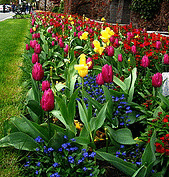
Border Planting
Select low growing bulbs and plant along the edge of garden or landscape beds. Plant a double or staggered row.
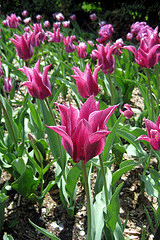
Mass Planting
Plant a single color or single type of bulb in a solid mass or in drifts for dramatic visual impact. Just remember that a dense mass makes it a bit more difficult to plant later blooming perennials and may leave gaps in your summer garden.
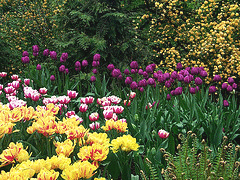
Interplanting
Sprinkle bulbs into beds of annuals, perennials or wildflowers to add interest. Planted randomly in singles, small clusters, close together and widely spaced will create a natural look like you might find in a meadow. Renowned bulb designer Jacqueline van der Kloet introduced us to the sprinkle design, also using several varieties of bulbs throughout a design. She encourages a toss them out and plant them where they fall technique to create natural charm.
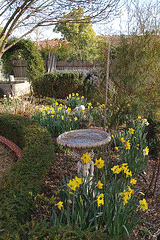
Perennial Beds
Begin your bloom show with spring flowering bulbs. Fill in blooming gaps with summer flowering rhizomes, tubers and fibrous root bulbs.
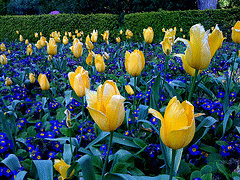
Foundation Plantings
Add groups or drifts to your foundation planting to add color before blooming shrubs or container gardens bloom. Evergreen shrubs make a wonderful backdrop for colorful blooming bulbs.
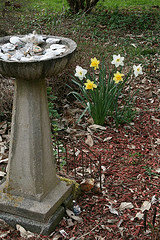
Accent and Punctuate
Use small clusters of bulbs with bright blooms to draw attention to things in your garden or landscape. This can be foliage plants, evergreens, path an entryways or statuary.
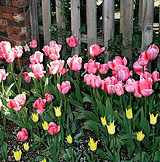
Grouping
Groupings of spring bulbs in garden beds or foundation plantings should generally be at least a dozen bulbs to attract attention. Summer bulbs often produce larger blooms, requiring fewer plants. Groups of 3 or 5 may be enough, with odd numbers generally creating the most pleasing effect.
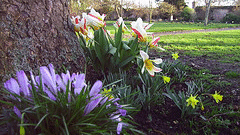
Underplanting Trees
Bare deciduous trees allow sunshine to reach your bulbs when they need it. But not all spring flowering bulbs will do well competing amongst tree roots. Some that do are crocus, snowdrop, grape hyacinth (muscari), bluebells, squill and early daffodils.
Lawn Plantings
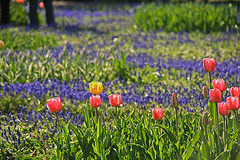
Unless the grass is cleared out along an edge or corner of a lawn I must discourage planting bulbs within the ordinary suburban lawn. The area cannot be mowed until the bulb’s foliage has died back, causing an unsightly mess. If you have any area that can go without mowing long enough, bulbs for naturalizing are the best choice. Consider snow drop, crocus, squill or daffodils that bloom very early. Mowing the foliage before it dies off will cause the bulbs to perish eventually, but you will have the best success with bulbs that naturalize easily.
Single Rows
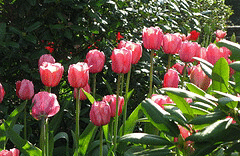
A single row of bulbs in a uniform line should be saved for very formal gardens or landscaping. Plant in a more natural fashion of groups or irregular masses for a more pleasing look and higher impact.
Clustered Small Bulbs
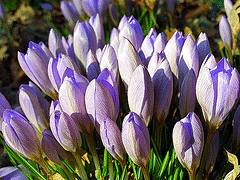
Small bulbs in small quantities are not easily seen from a distance. Plant them in large numbers to attract attention, as many as 50 or more. Or plant them along pathways or sidewalks where they will be seen from close up . A small area should be planted with a single color to make the space appear larger.
Containers
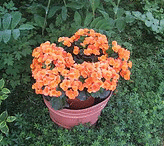
Bulbs are easily grown in containers. Bulbs can be planted very close in a container, but needs a deep container to provide the proper planting depth and room to grow deep roots. In the north and midwest, bulb containers will freeze solid if left outdoors and must be stored in the garage, shed, or cold basement to go dormant. Or just treat them as annuals and replant each year, using spring and summer blooming bulbs or combining them with other annuals or perennials.
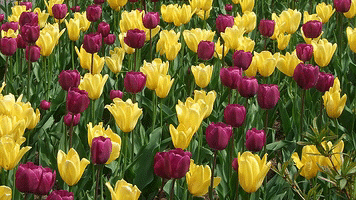
Colors
The colors you choose will create certain moods. Cool colors such as blue and violet tend to recede and will create a sense of calm. Reds and oranges will create excitement and attract attention.
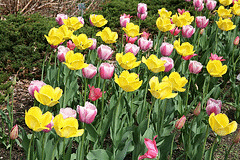
Mixing Bulbs
Don’t mix up too many bulbs in a bed. Perhaps just pick a few varieties of the same family, for example a few types of daffodil that will bloom at different times. Or use all tulips in three colors, all hot, all cool or all pastel.
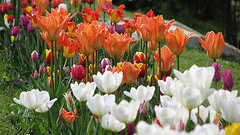
Experiment!
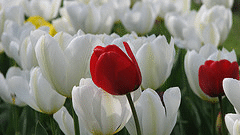
Have Fun!