Among the toughest shrubs on this list are alpine currant (Ribes alpinum), hardy to Zone 2, and bridalwreath spirea (Spiraea x vanhouttei), which can even flourish in Zone 3. For spring flowers in Zones 4 and 5, look at flowering almond, serviceberry and the University of Minnesota's 'Lights' azaleas, whose flower buds survive at least -30°F.
"Best performing" here isn't about flowers alone. Shrubs are part of a garden's structure: they fill sunny, shady, dry, wet or windy spots with little attention. So think about what you want a shrub to do before you choose. These are some of the most reliable hardy deciduous shrubs, the woody ones that lose their leaves in winter. If flowers are your main goal, see my easy flowering shrubs too.
Here's how the first eight shrubs on this page compare, in the order they appear below:
| Shrub | Hardy to | Sun | Height |
|---|---|---|---|
| Flowering almond | Zone 4 | Full sun | 5–8 feet |
| Alpine currant | Zone 2 | Sun to part shade | 3–5 feet |
| Serviceberry | Zone 4 | Sun to part shade | Up to 20 feet |
| 'Lights' azaleas | Zone 4 | Sun to part shade | 2–6 feet |
| Beautybush | Zone 5 | Full sun | About 10 feet |
| Korean boxwood 'Wintergreen' | Zone 4 | Sun to part shade | 2–4 feet |
| Butterfly bush | Zone 5 | Full sun | 3–5 feet |
| Bridalwreath spirea | Zone 3 | Full sun | 6–8 feet |
Flowering almond (Prunus glandulosa & triloba)
Flowering almond is a spring-flowering shrub for full sun, hardy in Zones 4–9, though winter protection is advised. It blooms in late April, before the leaves open.
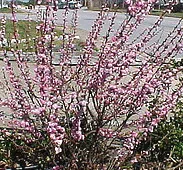
Prunus includes large fruit trees, but several species are "dwarf" shrubs. Dwarf is relative here: for a shrub, these aren't small. 'Rosplena' has double pink blooms and grows to 5 feet. 'Multiplex' has 1-inch pink pompom blooms and grows to 8 feet.
Both are hardy to Zone 4, with winter protection advised. If you need to prune, do it after the blooms fade, for the best flowers next year. Cultivars may or may not produce fruit. Almonds do best in moist, well-drained soil, and they can be prone to a range of diseases and to damage from mice.
Alpine currant (Ribes alpinum)
Alpine currant is a tough hedge shrub, hardy in Zones 2–7, that grows in full sun to part shade. It's a favorite for hedges because it takes the cold and adapts to most conditions.
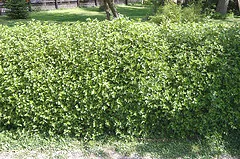
It's easy to keep tidy with regular trimming, and it resists disease, so the shiny dark green leaves stay healthy. It prefers moist, well-drained soil but survives dry and alkaline soil, and it handles wind well. For more shrubs that like damp ground, see shrubs for moist soil or shade.
The branches grow slightly horizontal in a natural mound, so a hedge needs less shearing. It usually grows 3–5 feet tall and 5–6 feet wide, and 'Green Mound' is a little smaller, about 3 feet each way.
Bright red fruit appears in midsummer, but only if male and female plants grow together. Most cultivars sold in stores are male and won't bear fruit.
Serviceberry, shadbush (Amelanchier canadensis)
Serviceberry is a white-flowering spring shrub, hardy in Zones 4–8, with sweet dark fruit that birds and people both eat. It grows in sun, part shade or shade.
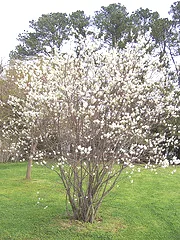
It grows strongly upright, so it's easy to prune into a tree form or use for hedges and screens. It can reach 20 feet tall and 5–8 feet wide, though the species can spread 15 to 20 feet, so give it room. Leaves turn red in fall.
For a smaller version, try Amelanchier alnifolia, hardy in Zones 2–7. This rounded shrub suits borders and foundations, with white flower clusters in early spring, then the dark fruit. Even in shade it colors up yellow, orange and red in fall. Read more about serviceberry shrubs.
Azaleas (Rhododendron)
For Zone 4, choose the University of Minnesota's 'Lights' series of deciduous azaleas. Their flower buds withstand at least -30°F, and they can be planted up to Zone 4 with minimal damage. They grow in sun to part shade.
Azaleas are popular spring-flowering shrubs that grow in shade or part sun, with many types to choose from. Not every azalea is that hardy, though. The Piedmont azalea (Rhododendron canescens), from the Southeast, may get through a Zone 4 winter in a sheltered spot, but it's hardy only in Zones 5–9. In Zones 3 and 4 the 'Lights' hybrids are the safer choice.
Planting and winter care
Don't plant azaleas too deep, because their roots are shallow. Most rhododendrons and azaleas want cool, moist, well-drained, acidic soil with plenty of organic matter and water. The 'Lights' azaleas are the exception: Iowa State Extension says they don't need the low soil pH other rhododendrons do, and most do well in typical Upper Midwest soils.
Rhododendrons can be damaged by an early freeze. An anti-transpirant spray in December and February helps stop winter winds drying them out. Read more about rhododendrons and azaleas.
'Golden Lights' azalea
'Golden Lights' is hardy in Zones 4–9 and has better mildew resistance than most azalea hybrids. In late spring it's covered in clusters of 1-inch golden orange flowers, and the leaves turn bronze in fall.
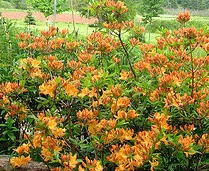
It grows in full sun or part shade. In ideal conditions it reaches 6 feet tall and 5 feet wide, though it may not grow as large in Zone 4.
'Mandarin Lights' azalea
'Mandarin Lights' is hardy in Zones 4–8 and blooms heavily in early spring. The bright orange flowers are slightly ruffled and lightly fragrant.
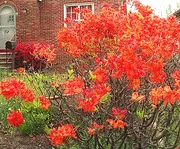
It's a large azalea, 6–8 feet tall and about 4 feet wide, upright and rounded. The leaves turn bronze in fall. It grows well in full to part sun.
'Northern Hi-Lights' azalea
'Northern Hi-Lights' is hardy in Zones 4–7 and very fragrant, with creamy white flowers that have a yellow upper petal. It blooms from May to early June.
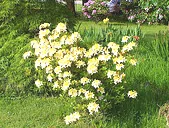
It grows fairly slowly to about 4 feet tall and 5 feet wide, and the leaves are somewhat mildew resistant.
'Orchid Lights' azalea
'Orchid Lights' is hardy in Zones 4–7 and very cold hardy. This compact dwarf reaches only 2–3 feet tall and wide, and it grows well in sun to part shade.
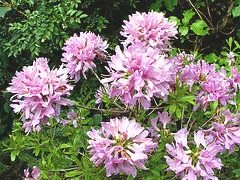
It blooms in early May, two weeks before the other 'Lights' azaleas. The orchid-colored flowers are 1½ inches across and sterile, so no seed pods form.
'Rosy Lights' azalea
'Rosy Lights' is hardy in Zones 4–7, with very fragrant, deep rosy pink flowers from May to early June.
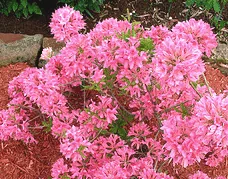
It's a large azalea that can reach 8 feet in ideal conditions, but it usually stays about 5 feet tall and 5–6 feet wide. It grows well in sun to part shade.
'Yaku Princess' azalea
'Yaku Princess' is hardy in Zones 5–9. It's hard to find and not quite as hardy as 'Golden Lights', but it may make it in Zone 4 with protection.
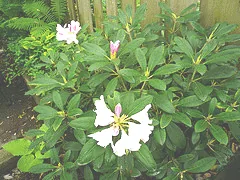
Its apple blossom pink flowers fade to a light blush in May and June. It prefers part shade to sun and reaches 3 feet tall and 4 feet wide. The flower buds form over the summer, so protect them with snow to save next spring's blooms.
'Weston's Lollipop' azalea
'Weston's Lollipop' is hardy in Zones 4–9. It's smaller and can do well in Zone 4, with sweet-scented, rich pink flowers marked in bold yellow.
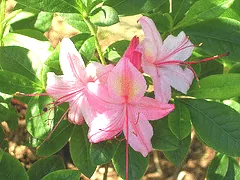
It blooms later than most azaleas, sometimes well into summer, and the leaves turn red and orange in fall. It resists mildew and pests, grows well in sun to part shade, and reaches 3 feet tall and 5 feet wide.
'Girard's Crimson' azalea
Zone 5 and warmer; skip in Zone 4. ‘Girard’s Crimson’ is hardy in Zones 5–8. It's one of the hardy, evergreen Girard's hybrids.
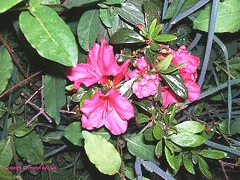
In early May it puts on a spectacular show of rosy red flowers 2½ inches across. The glossy green leaves grow dense and compact and turn a nice maroon in winter. It grows well in part sun to part shade in well-drained soil, reaching 3 feet tall and 3–4 feet wide.
'Girard's Fuchsia' azalea
Zone 5 and warmer; skip in Zone 4. 'Girard's Fuchsia' is hardy in Zones 5–8. It's another of the hardy evergreen Girard's hybrids, with a display of gorgeous fuchsia flowers.
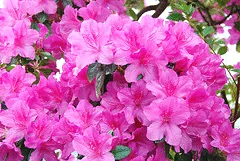
Its glossy dark green leaves turn maroon in fall. It prefers part sun to part shade and grows dense and compact, 3 feet tall and 3–4 feet wide.
Beautybush (Kolkwitzia amabilis)
Zone 5 and warmer; skip in Zone 4. Beautybush is an arching flowering shrub for full sun that grows to about 10 feet and is hardy in Zones 5–8.
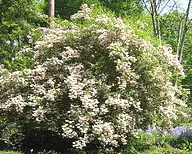
If you have room to show off its arching branches, it makes an excellent large specimen. In June it's covered in thousands of small pink flowers. It grows best in moist, well-drained soil.
You can prune beautybush to keep it smaller, but it loses some of the charm of its natural shape. Take out a few old stems every year to keep it healthy and in shape.
Boxwood (Buxus)
Most boxwoods are hardy in Zones 5–8 and grow in full sun to part shade. In Zone 4, choose the Korean boxwood 'Wintergreen' (Buxus microphylla), hardy in Zones 4–9, and give it a site sheltered from winter winds.
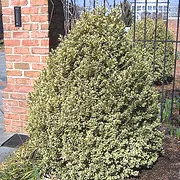
Boxwood is a dense evergreen with waxy emerald leaves. Korean and English boxwoods have long been used for hedges, and both shear into a beautiful dense shape. English boxwood is the larger, up to 15–20 feet, but Korean and English crosses have blurred the lines, so check the hardiness and size of each plant you buy.
Boxwood varieties
'Wintergreen' is the one for northern gardens: it grows well in Zone 4 and is less prone to winter discoloration. It has yellow-green leaves and a dense rounded form, 2–4 feet tall and 3–5 feet wide.
'Winter Gem' is a dwarf form with darker mature leaves (new growth is bright) and better cold hardiness. It grows dense and evenly rounded to about 3 feet.
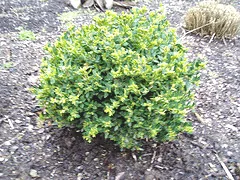
'Green Velvet' is hardy in Zones 5–8 (source), so in Zone 4 it needs a sheltered spot. It grows low and rounded with dark green leaves year-round, a little smaller than 'Wintergreen' at 2–3 feet tall and about 3 feet wide.
'Green Mountain' is a lovely cone-shaped boxwood, hardy to Zone 5 (source), so it also needs a sheltered spot in Zone 4. The shape is natural, though it may need a light shearing to look perfect. It grows quickly at first and ends up about 4 feet tall and 3 feet wide.
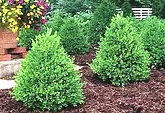
Buxus sempervirens 'Aureovariegata' is a tall variety that shears well into a cone, up to 8–10 feet tall and 6 feet wide, with yellow-mottled green leaves. It's hardy only to Zone 6. 'Green Tower' is a columnar boxwood that's perfect for topiary.
Winter care for boxwood
Several boxwoods are small and rounded, about 2–4 feet, which makes them excellent for hedges and foundations. Mulch them to keep the roots cool and moist. Water deeply until the ground freezes, so the plant goes into winter well.
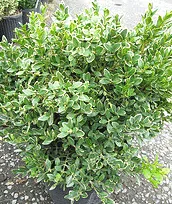
Boxwoods dry out easily in winter wind, which causes winter burn and sunscald: the leaves turn brown and drop. An anti-transpirant spray in December and February helps. Pick a site sheltered from winter winds, with some afternoon shade in winter.
Boxwoods are fairly low-maintenance evergreens. They grow slowly, need average water, and accept sandy or clay soil from slightly alkaline to acidic. If you use a granular fertilizer, keep it off the leaves and away from the stems.
Butterfly bush (Buddleia)
Zone 5 and warmer; in Zone 4 it dies back and regrows. Butterfly bush (Buddleja davidii) is hardy to Zone 5 and dies back in Zones 3 and 4, where it's grown like a perennial. It needs full sun.
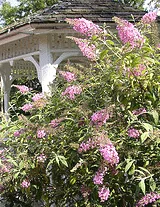
Butterfly bush is sold as easy to grow, but in most northern gardens it seems to need more luck or skill. Even in Zones 5 and 6 it often dies to the ground in winter. Northern gardeners still prize it for its long, heavy bloom, the butterflies it attracts and its endless cut flowers.
Butterfly bush varieties
Some varieties, such as 'Adonis Blue' and 'Strawberry Lemonade', can succeed in Zone 4. 'Mary's White' and 'Rice Creek' have also survived Zone 4 winters with no winter mulch, which makes them excellent picks for the coldest regions.
'Adonis Blue' is a dwarf version of 'Black Knight' that grows to about 3–5 feet, covered in huge midnight blue flowers from early summer to early fall. 'Strawberry Lemonade' has leaves edged in bright yellow that mature to cream, with 6-inch pink flowers all summer.
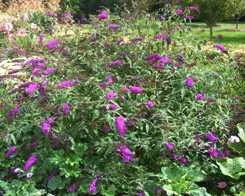
In Zone 5 and warmer, 'Royal Red' is probably the most widely grown, with fragrant violet-red flowers. 'Honeycomb' is an 8–12 foot shrub hardy to Zone 5, covered in 12-inch spikes of yellow flowers from late summer through fall.
Winter care for butterfly bush
Prune back to live wood in early spring for the best blooms, since the bush dies back at least partly in the north. Even Zone 4 hardy varieties need heavy mulch to protect the roots. Where winters drop below -38°F, protect every butterfly bush much like a hybrid tea rose: mound several inches of soil at the base and mulch heavily.
Give it full sun and well-drained soil. Many butterfly bushes are drought tolerant, but without enough water the plant wilts badly and looks unsightly. Plenty of gardeners grow them well in the right spot, but expect them to need more care than most shrubs up here.
Bridalwreath (Spiraea x vanhouttei)
Bridalwreath spirea is a big, arching spring bloomer for full sun, growing 6–8 feet tall. It's hardy in Zones 4–8 and can even flourish in Zone 3.
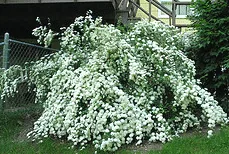
This strong, large shrub has unusual arching branches, so it makes a good specimen where there's plenty of room. In spring it's covered in white flowers, and it can spread up to 12 feet wide. Full sun gives the most flowers, but it also does well in part shade.
Every year after flowering, prune out up to one third of the shrub for the best flowers the next year. It adapts to most soils but prefers good drainage. In fall the leaves turn plum-green.
Blue mist shrub (Caryopteris)
Caryopteris (Blue Mist Shrub): (Caryopteris) Blue Mist Shrubs produce blue flowerspikes from midsummer to fall. Foliage is aromatic. They are great for low hedges planted two feet apart, or create a stunning effect in groups. They are easy to grow, heat and drought tolerant, and resistant to deer. Do not overwater! They grow quickly and thrive in average soil, but do prefer well drained, loose and loamy. Blue Mist is also loved by butterflies.
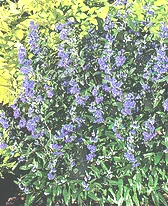
‘Blue Beard’ also known as ‘Blue Mist Spirea’ (C. x clandonensis ‘Blue Mist’) Full Sun Hardy in zones 5-9 Flowering shrub. ‘Blue Beard’ has a compact mounding growth habit, reaching about 2 1/2 feet high and 2 feet wide, growing at a moderate rate. Fragrant foliage is silvery blue green, and blooms are misty blue in late summer and early autumn, blooming for a long period. It is widely adaptable to soil types and conditions, except perpetually moist.
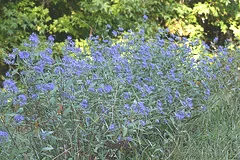
Zone 5 and warmer; skip in Zone 4.
‘Longwood Blue’ (C. x clandonensis) Full to part sun Hardy in zones 5-9 Flowering shrub. This classic variety of blue mist shrubs has a beautiful upright growth habit. Highly aromatic spicy scented foliage is silvery and sky blue blooms are produced heavily over a long period. Bloom stems cut for bouquets last a week or longer. Perfect for hedges, borders, foundation plantings and even containers. Plant in sunny dry areas, detests wet conditions.. Prune in very early spring. Grows to at least 2 feet high and wide.
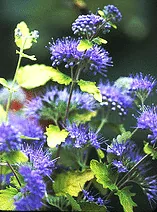
Zone 5 and warmer; skip in Zone 4.
‘Sunshine Blue’ (C.incana) Full sun to light shade Hardy in zones 5-8 Flowering shrub. Foliage is bright yellow, tinged green. Deep blue flower spikes are 6” tall from midsummer until fall. Full growth and superior branching for a strong shrub. Reaches 30” tall and 36” wide. Prefers well drained soil, does not like moist conditions. Prune in very early spring. Will die back north of zone 5, but should regrow readily.
Chokeberry
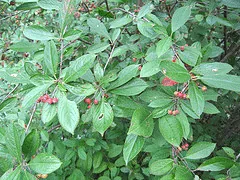
(Aronia melanocarpa ‘Autumn Magic’) Full sun to part shade Hardy in zones 3-7 Flowering shrub. A large shrub with glossy green foliage that turns fire red in autumn. White scented flower clusters in spring are followed by large edible berries that mature over summer. Upright growth reaches 5 feet and 3-5 feet wide. Chokeberry prefers full sun for best flowering and is very drought tolerant. Adapts easily to a variety of soils as long as it is well drained.
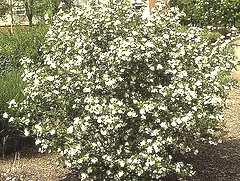
(Aronia malanocarpa elata) ‘Glossy Black Chokeberry Full sun to part shade Hardy in zones 3-7 Flowering shrub. This large landscape shrub has a compact, rounded form. It is very hardy and adaptable to wet or dry conditions. White flowers appear in May and are followed by black fruit. Fall foliage color is brilliant red. Grows to 4-6 feet high and wide.
Daphne
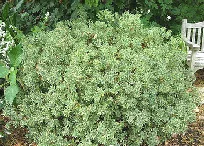
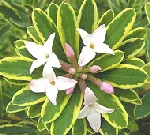
Full sun to part shade Hardy in zones 4-7 Flowering shrub. The striking 'Carol Mackie' is easy to grow in ordinary soil up to zone 4. The dense rounded flowering shrub has unusually variegated leaves, with a golden yellow band around each edge. Abundant star shaped pale pink flowers in May and June are richly fragrant. Reblooming may occur, and tiny red fruits replace the blooms in fall. ‘Carol Mackie’ Daphne requires well drained soil and prefers neutral to slightly acidic soil. Preferring dry soil conditions, Daphne is drought resistant. Grows slowly but reliably, reaching a rounded 3’ high and ups to 4 - 6’ wide.
Evergreen in mild regions. Deer resistance is a bonus. Daphne requires little or no pruning and little or no fertilizer. Hardiness is generally listed as up to zone 5, but it has proven to be hardy in zone 4, down to 30 degrees below F. Hard pruning after a killing frost is suggested where snow cover is heavy to prevent branch damage by heavy wet snows. The plant usually rebounds quickly the following spring. Note that Daphne foliage and fruit are poisonous if ingested. Daphne is also known to inexplicably die, for no apparent reason. Do avoid disturbing the roots and do not attempt transplant.
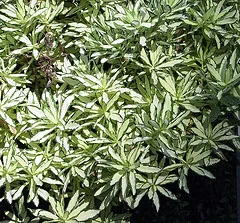
'Briggs Moonlight' foliage is a reverse variegated version of the 'Carol Mackie'. The leaves have creamy yellow centers with green margins. Pink buds open to pale pink to white blooms that attract butterflies. The compact, rounded shrub grows only to a 2 foot mound. Prefers full sun, neutral sandy soil, minimal watering, and will benefit from winter protection even in zone 4. Daphne is generally hardy to zone 4. Soil must be well drained. Should not be pruned unless necessary or transplanted. Like other Daphnes, ‘Briggs Moonlight’ may die for no apparent reason. Many gardeners are so enamored by the gorgeous foliage, that they will plant it over and over nonetheless. All parts of the plant are poisonous.
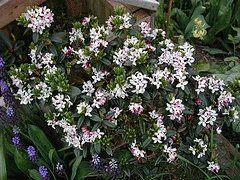
‘Retusa’ grows densely mounded reaching only 2 to 3 feet high and wide. The blooms are fragrant borne in dense clusters of pink with pink tinged centers. Foliage is leathery and shiny dark green. This is a very easy to grow daphne requiring full sun to part shade and moist well drained soil. Bright red drupes attract birds. Hardy in zones 6 to 9.
Dogwood
(Cornus) Full sun to shade Hardy in zones 2-8 Flowering shrub. A staple of the northern landscapes, there is a versatile variety of hardy shrub and tree form available for northern climates. C.alba 'Elegantissima' is probably the most common in the north as a property corner anchor or screen due to its large size (up to 10 feet). This red twigged dogwood has variegated leaves, providing summer and winter interest and texture. It displays the best fall color in full sun, with shades of gold, apricot and rose, but will do well in part shade. Bright red bark in winter is a bright spot in the landscape. Also tolerates damp soil very well and is hardy to zone 2,
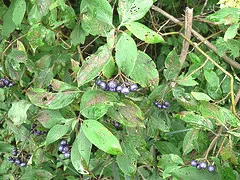
C. amomum ‘Silky Dogwood’ is another large dogwood that is excellent for screening, windbreaks and stabilizing stream banks. For some reason it loves the Great Lake states, but doesn’t do as well outside the area other than some areas of the southeast Dark green leaves with white flowers grows in an upright, rounded habit, reaching 6-10 feet tall. It loves moist, poorly drained and slightly acidic soils. Branches that come in contact with the ground will root and form a thicket.
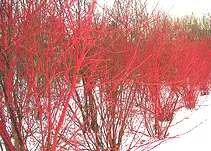
C. sericia ‘Red Osier’ dogwoods are also hardy to zone 2, reaching 7-10 feet high and wide. You will find many C. sericia with many different names, including the ‘Red Osier’, ‘Red Twig’, ‘American’, ‘Western’ and ‘Red Stem’. They are all nearly the same plant, perhaps with minor differences. Most of the ‘Red Osiers’ are fast growing. ‘Isanti’ has bright red winter stems, the most colorful of the Red Osiers, and is 5-7 feet tall. It is slow growing and dense with red twigs. Fruits heavily to attract birds.
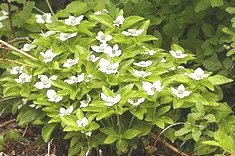
C. canadensis 'Bunchberry, Dwarf Cornel' is a creeping species, actually a subshrub that spreads by rhizomes. ‘Bunchberry’ requires shade to be at its’ best, and prefers moist, well drained, acidic soil. Soil must be cool, 65 degrees or less. It is only 2-8” tall. White flowers in June or July are followed by edible berries.
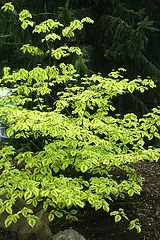
C. alternifoilia 'Golden Shadows' displays the graceful habit of a Pogoda, with lime green leaves edged in gold. ‘Golden Shadows’ is a large enough shrub to be trimmed into an ornamental tree. Fragrant white flowers in June are followed by dark blue fruit.
Most dogwoods do not like a lot of sun, plant in shade to part shade. Most are also quite tolerant of diverse conditions and are easy to grow with little care required.
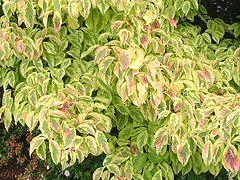
C. alba ‘Elegantissima’ Silverleaf Dogwood is very commonly grown in the North and Midwest because it is so hardy and adaptable. Lovely variegated foliage is green with creamy white edges. Red purple branches stand out against the snow in winter. Silverleaf will grow well in sun, part shade or shade and is hardy to zone 2. This is a large shrub, reaching easily 7 feet high and 5 feet wide. Size is easily controlled by regular pruning.
Elderberry
(Sambucus ) European Elderberry are quite large shrubs, larger than our American native Sambucus canadensis, that produce large flat cluster of flowers in spring, and large clusters of black berries in fall. In general, they like moist, well drained soils, but will tolerate both wet and dry, as well as alkaline soils. They will also tolerate windy sites. Elderberry may tend to sucker, and may need occasional pruning to hold a good form. Aphids problems are common, and occasionally may have trouble with borers, cankers and mildew.
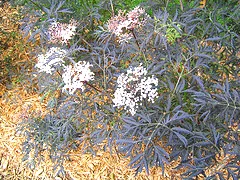
Sambucus nigra ‘Eva’ (Black Lace Elderberry) Full sun to part shade Hardy in zones 4-7 Flowering shrub. ‘Black Lace’ has deep dark purple foliage that is lacy and finely cut. The effect is a similarity to Japanese Maple. Leaves hold their color well even in the extreme heat of the southern zones. Pink buds open to lacy white blooms May through June. Mature size is 8-10 feet tall and wide, or larger in ideal conditions. Makes an excellent specimen plant, and contrasts pale or bright foliage beautifully.
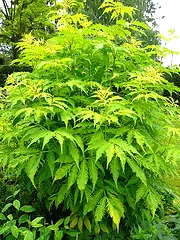
Sambucus ‘Sutherland Gold’ Full Sun Hardy in zones 3-8 Flowering shrub. Foliage is bright golden, with deeply cut leaves with a fern-like effect. New growth starts out bright coppery red, then to golden yellow, and finally mellows to a lime green. Masses of creamy white star shaped flowers develop into red fruit clusters that attract birds. This tough plant does well on a southern exposure, standing up well to all day sun and heat. But it does enjoy some sun protection to avoid leaf scorch in more southern zones. Deer Resistant. Mature size is 12 feet high and 8 feet wide. Growth can be restrained with regular pruning.
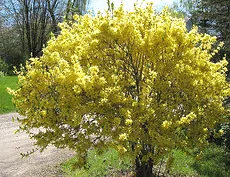
Forsythia
Full sun Hardy in zones 4-8 Flowering shrub. This shrub is best known for its showy brilliant yellow flowers in early spring. They need some space, as they can grow quite large, with long arching branches sprawling wildly. They will prune well to keep in check, but remember never to prune until after they have flowered. Prune out the oldest wood down to the ground. Forsythia blooms on old wood, so don’t remove too many branches each pruning to preserve blooms. Will tolerate severe renewal pruning if necessary. Forsythia thrives in ordinary soil in full sun or light shade.
Will tolerate alkaline soils, and prefers moist, well drained. The hybrids are generally hardy to zone 3 or 4. 'Spring Glory' (F. x intermedia) explodes in pale yellow blooms in April, reaching 6-8 feet tall and wide, and is hardy to zone 3. Form is upright with slightly arching branches. ‘Spring Glory’ is rust resistant. 'Gold Tide' is a dwarf that only reaches 2-3 feet, spreading to 4 feet - excellent for a slope or trailing over a wall. It is compact with a ground hugging habit and is excellent for mass plantings.
Yellow blooms appear in early spring. It is not tolerant of dry soils and needs good snow cover for consistent spring bloom. Hardy to zone 4. ‘Northern Gold’ was developed in Canada and is truly northern hardy. Flower buds are cold hardy and reaches 6-8 feet tall and wide, with an upright habit. Hardy to zone 4, hardy in zone 3 other than perhaps the most severe winters, and will hold up well even in zone 2 with shelter and adequate snow cover.
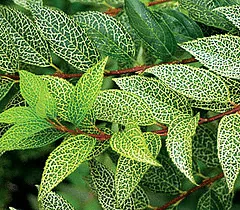
‘Kumson’ is a unique Korean cultivar that has interesting dark green leaves with silver veins, providing season long interest unusual to forsythia. The leaf patterns are most pronounced on new growth, so frequent pruning will encourage more foliage interest but reduce the flowering. Yellow flowers appear in early spring like all cultivars.
Will do fine in sun, but does best in shade to part shade. It grows well in most soils and is drought resistant once established. ‘Kumson’ reaches 8-10’ tall and 7-9’ wide, and is hardy to zone 4. Forsythia ovata varieties are hardy to zone 5. Ovata is known as the Early Forsythia, and grows to 4-6 feet. For best flowering for all forsythia, severely prune old wood immediately after bloom.
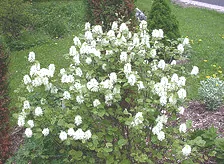
Fothergilla
Zone 5 and warmer; skip in Zone 4.
(Fothergilla gardenia) ‘Dwarf’Full to part sun Flowering shrub Hardy in zones 5-8, perhaps 4. This is a small dense shrub with unusual 1-2” bottlebrush flowers that are creamy white and fragrant. The multi-stemmed suckering bush is compact and rounded to upright oval. Foliage is blue green with pale green undersides. Fall color is inconsistent but generally excellent, ranging from yellow-orange to red-purple. Fothergilla prefers an acidic, cool, well drained soil. Mature size is 2-3’ high and wide.
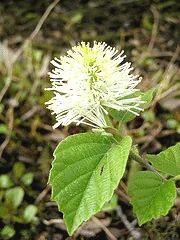
(Fothergilla major) ‘Mount Airy’ is a much larger shrub, reaching 5-6’ high and 4-5’ wide, but is know to grow even larger in good conditions. ‘Mount Airy’ prefers full sun, it will tolerate light shade but will not flower as prolifically or produce good fall color. White bottlebrush blooms in May are somewhat fragrant. Foliage is dark green and underside is a grayed white. Fall color is a superior orange to red. ‘Mount Airy’ is most flattered by a dark evergreen background. Wonderful alternative to smokebush, used as a foundation planting, shrub border or in open “natural” areas.
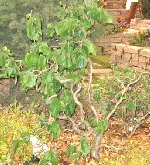
Harry Lauder’s Walking Stick: (Corylus avellana contorta) Full sun to part shade Hardy in zones 4-8. If you are looking for something REALLY unusual, this is it. Unbelievably contorted branches that go way beyond the term winter interest. Striking accent especially in a contemporary or oriental landscape. Spring produces showy yellow 2-3 inch catkins, and inconspicuous red flowers on female plants. Rarely produces a fruit, but may produce nuts. Cut branches are a great accent to your fresh, or silk arrangements. Does well in sun or shade, southern exposure may be best, in average well drained soil.
Will benefit from protection from the hottest afternoon sun. Can reach 8-10 feet tall. Thinning will increase the summer interest by exposing more of the contorted branches. This is the only necessary pruning other than removing suckers if you want to retain the natural beauty of this shrub. Dry the thinned out branches to use in floral arrangements. Although the plant seems to be pretty hardy, do try to buy own root in case of die back. They are generally grafted to Corylus colurna, and tends to grow suckers which must be pruned out. Also known as Corkscrew Hazel and Contorted Filbert.
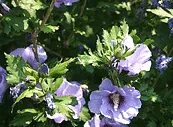
Hibiscus
Zone 5 and warmer; skip in Zone 4.
(syriacus) Full sun to part shade Hardy in zones 5-8 Flowering shrub. Here, referring to the woody shrub, is only hardy to zone 5. Also known as the Rose of Sharon, 'Sanchoyo' with deep rose-pink double flowers, or 'Blue Bird', with huge single blue blooms, are absolutely stunning and bloom all summer. They are both a tall, narrow shrub (8-12 feet high and 6-10 feet wide) that is hard to find for filling corners or landscaping with all summer blooms.
There are several cultivars including ‘Diana’ with pure white flowers; ‘Jeanne d’Arc’ with double white flowers; and ‘Lucy’ with double red flowers. None are successful in zone 4 without protection. Hibiscus and ‘Rose of Sharon’ should be heavily mulched in zone 5 to ensure the roots are protected. In regions that drop below -38 degrees, further protection is advised, treating the plant almost like a hybrid tea rose. Mound several inches of soil at the base of the plant, and mulch heavily. Hibiscus prefers moist well drained soils and is tolerant of alkaline soil. Annual pruning in early spring will improve flowering.
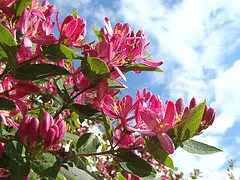
Honeysuckle Bush, dwarf: (Diervilla Lonicera) Full sun to full shade Hardy in zones 3-7 Flowering shrub. This is one tough little shrub. Excellent for difficult sites such as slopes, or naturalizing and mass planting, or along a wood’s edge. Foliage is bronze-green. Small yellow flowers are produced in late spring. Bees, butterflies and birds are attracted to the blooms. Tolerates shade. Fall foliage is red. Grows to 4’ high and wide. Diervilla sessillifolia ‘Butterfly’ is similar, with a compact growth habit. Bright green foliage and early summer yellow flowers, prefers full to part sun.
Will adapt to dry shade. Reaches about 3-5’ high and wide, and is hardy in zones 4-7. Lonicera ‘Honeyrose’ was introduced by the University of Minnesota, a testament to its’ hardiness, and has rosy red flowers in early to midsummer. Foliage is deep blue-green and is resistant to Honeysuckle witches broom aphid. It makes a wonderful informal hedge or screen. Good for difficult sites and windbreaks. Grows well in full sun to part shade, reaching 10’ high and 8-10’ wide. Hardy in zones 4-7.
Hydrangea
Full sun to part shade Hardiness varies Flowering shrub. It seems not that long ago that hydrangea were only found in grandma's garden. With so many new varieties, they are widely used in foundation plantings, landscaping and gardens. They are wonderful singly or in masses, most doing best in shade to part-shade.
But not dense shade, if the grass won’t grow, neither will your hydrangea. If your hydrangea should fail to flower, it could be due to winter kill of the buds, pruning at the wrong time, too much shade for the variety or excess nitrogen.
Annabelle
'Annabelle' (Hydrangea arborescens) produces enormous white "snowballs" in summer, keeping a mounded shape at about 4 feet. It does best in part to full shade, but will tolerate full sun if it receives enough water. Unlike the macrophylla hydrangeas, arborescens will bloom every year even after winter dieback (which will happen in the north zones) or severe pruning, because ‘Annabelle’ blooms on new wood.
Normally, prune only sparingly to encourage stems to grow sturdy enough to support the heavy blooms and to encourage more, but just slightly smaller blooms. Grows to 4-5’ high and 3-5’ wide.
Hardy to zone 3, perhaps even 2, but will often die back to the ground. This does not affect flowering since it flowers on new growth. An occasional ‘Annabelle’ is not a good bloomer, so buy yours in bloom to make sure you get one that is not skimpy.
Mophead hydrangeas
Macrophyllas are the “mophead” hydrangeas. Hydrangea macrophylla include the “colored flower” cultivars; Endless Summer and Nikko Blue. They are really only hardy to zone 6 and typically may not flower in zone 5. Varieties that flower on old wood - since they often die back to the ground in zones 4 and 5, they will not flower.
Zone 5 hardy Hydrangea should be heavily mulched to ensure the roots are protected. In regions that drop below -38 degrees, further protection is advised, treating the plant almost like a hybrid tea rose.
Mound several inches of soil at the base of the plant, and mulch heavily may improve the chances of a successful bloom in spring. The hydrangea with blue and pink flower heads require close attention to soil pH to retain their color.
If you do not have acid soil (pH of 6 or less), it is easiest to control in a container with aluminum sulphate, which is commonly found in gardens centers for the colored hydrangeas. Mopheads struggle in sandy soils and dry conditions. Mopheads never need pruning other than to remove dead branches.
They bloom in June or July on old wood, forming their flower buds just afterward in August or September. (‘Endless Summer’ is an exception, it will bloom on old AND new wood).
Pruning of 1/3 or more of the branch length to reduce size should be done immediately after blooms fade to preserve next years’ bloom, but the shrub grows back so quickly that the pruning is nearly useless. Simply removing the dead flowerheads (deadheading) can be done at any time. Up to one third of the old stems may be removed to the ground to rejuvenate an old plant.
Blushing Bride
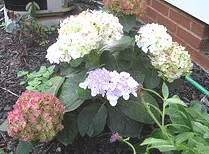
‘Blushing Bride’ (Hydrangea macrophylia) produces 4-8’ flowers with dark green foliage. It is common to see a broad range of bloom colors on a single plant, from pink blush, to deep pink.
Blooms open pure white and mature to blush pink or deep blue depending on soil pH. It blooms on old and new wood. Strong stems and branches keep the blooms upright, and perfect for cutting. Grows to 3-6’ tall and wide. Does not like full sun. Hardy in zones 5-9.
Endless Summer
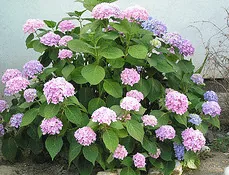
‘Endless Summer’ (Hydrangea macrophylia ‘Bailmer’) This showy mophead blooms on old and new wood, producing blooms even after winter dieback. However the plant has not been found to be highly reliable in zone 4. Complete dieback after a zone 4 winter can take the better part of zone 4’s short growing season to regrow.
Blooms come so late that the first frost may be right around the corner. Try in a container to bring indoors for the winter, or in a very protected microclimate. In the south, ‘Endless Summer’ will produce two full bloom periods. Flowers tend to pink but will turn blue in acid conditions (pH of 6 or less). Grows to 3’ high and wide. Hardy in zones 4-9.
Lacecap hydrangeas
Macrophylla normalis are the “Lacecap” hydrangeas, and are grown and cared for exactly the same as the mopheads. They are not quite as showy, but can be quite graceful and magnificent in a more subtle way. Lacecaps never need pruning other than to remove dead branches. They bloom in June or July on old wood, forming their flower buds just afterward in August or September.
Pruning of 1/3 or more of the branch lengths to reduce size should be done immediately after blooms fade to preserve next years’ bloom, but the shrub grows back so quickly that the pruning is nearly useless. Simply removing the dead flowerheads (deadheading) can be done at any time Up to one third of the old stems may be removed to the ground to rejuvenate an old plant.
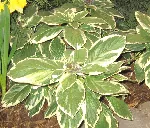
Hydrangea ‘Light O Day’ is interesting when out of bloom, with bold variegated leaves. It is a more reliable bloomer among the variegated varieties. Inner blooms can be pink or blue, surrounded by white. It is a lacecap mutation of Endless Summer, but will not rebloom. For best bloom production, plant in light shade, dappled shade, or morning sun with afternoon shade. Hardy in zones 5-9.
Tokyo Delight
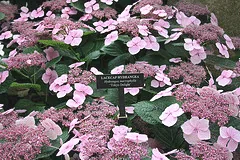
Zone 5 and warmer; skip in Zone 4.
‘Tokyo Delight’ will produce pink blooms in alkaline soil, blue blooms in acid soil (pH of 6 or less) in July and August. Faded blooms begin to turn shades of burgundy in autumn. Blooms on old wood. Prefers part shade in moist, well drained soil. Grows to 3-6’ high and wide. Hardy in zones 6-9, perhaps in zone 5.
Mariesii Variegated
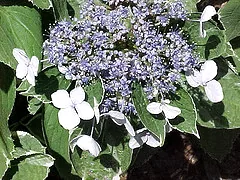
‘Mariesii Variegated’ has cream edged foliage and is long blooming in early to midsummer. The cream variegation is not stable, and will sometimes revert to all green. Bluish white florets surround bright blue florets. Grows best in part shade in zones 8 and 9, full sun more north.
Reaches 5’ high and wide, growing in a dome shape. Pruning should be done right after the blooms fade, as it sets new blooms immediately after flowering. Blooms best in zones 8 and 9, bloom buds may freeze off in colder zones. Hardy in zones 5-9.
Oakleaf hydrangeas
Hydrangea quercifolia, “Oakleaf”, are white blooming and are winter hardy further north than the arborescens. The leaves are shaped like oak leaves. It blooms best where summers are hot, but is hardy further north than the mopheads. They can survive in dry conditions and with little attention.
They do not like wet feet and must have excellent drainage to avoid root rot. Oakleaf never need pruning other than to remove dead branches. They bloom in June or July on old wood, forming their flower buds just afterward in August or September.
Pruning of 1/3 or more of the branch lengths to reduce size should be done immediately after blooms fade to preserve next years’ bloom, but the shrub grows back so quickly that the pruning is nearly useless. Simply removing the dead flowerheads (deadheading) can be done at any time Up to one third of the old stems may be removed to the ground to rejuvenate an old plant.
Snow Queen
Zone 5 and warmer; skip in Zone 4.
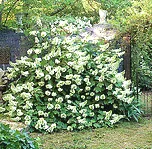
‘Snow Queen’ is considered one of the finer shrubs for the landscape and garden. Large dark green leathery leaves and 12 to 15” pure white upright panicles of blooms make a striking presentation.
Foliage turns burgundy in fall. It is highly pest and disease resistant, and grows well in either full sun or part shade Planted 5 feet apart, ‘Snow Queen’ forms a wall of white blooms. Reaches 10-12’ high and wide. Hardy in zones 5-8.
Pee Wee
Zone 5 and warmer; skip in Zone 4.
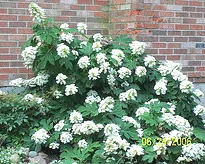
The elegant 'Pee Wee' produces 10” elongated flower heads of white that turn pale pink by fall. ‘Pee Wee’ is a dwarf ‘Snow Queen’ which will do well in full sun to part shade. Leaves turn burgundy-brown in fall, beautiful with the dried flower heads. Grows to 4 feet high and 3 feet wide. Hardy in zones 5-9 ‘Sikes Dwarf’ is similar, but will do quite well in mostly shade.
Panicle hydrangeas
Paniculata are the “PeeGee” hydrangeas. Panicle Hydrangeas (Hydrangea paniculata) is a much larger shrub, 10-15 feet high and wide, and produces pyramid shaped flowerheads that turn from white, to pinkish, finally to brown in fall. Panicle hydrangea bloom on the current year’s growth, so they can be pruned in fall, winter or spring.
However they do not need pruning every year. Prune out only crossing branches and as needed to achieve desired form. PeeGee hydrangeas need more sun than the mopheads, several hours a day. They are also hardy to zone 3.
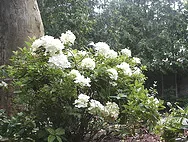
‘Grandiflora’ is the famous ‘PeeGee’. It is an upright mounded shrub, but is also grown as a small ornamental tree. The pure white conical flowers appear in July and August, and they mature to pinky bronze in fall. The dried flowerheads are beautiful in arrangements. Grows to 8’ high and 10-15’ wide. Full sun to part shade. Hardy in zones 3-8.
Limelight and Pink Diamond
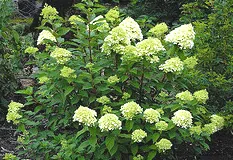
‘Limelight’ is a newer variety of hydrangea. It has unique bright lime green flowers that form a rounded panicle. ‘Limelight’ blooms profusely on new wood in midsummer. Grows well in full sun to light shade, the lime color will be more pronounced in some shade. Particularly in more southern zones, will benefit from some light shade. Reaches 6-8’ tall and wide. Hardy in zones 3-8.
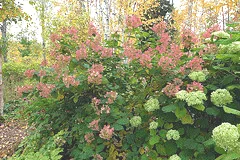
‘Pink Diamond’ develops huge 10 inch pink flower buds that open to white in late summer, then the pink intensifies as the blooms age. Hot weather and sun may diminish the bloom color. This hydrangea makes a stunning statement as a specimen plant. Does best in sun to part shade, and grows to 6-8’ high and wide. Hardy in zones 3-8.
Tardiva
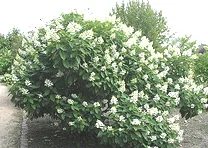
‘Tardiva’ is similar to ‘PeeGee’ but blooms later, in mid August, with larger flower panicles held on thick stems. With a loose, shrubby growing habit, ‘Tardiva’ reaches 6-8’ high and 8-10’ wide. Grows well in full sun to part shade. Hardy in zones 3-8.
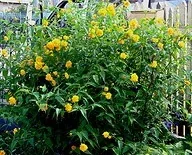
Japanese Rose
(Kerria japonica) Full sun to shade Hardy in zones 5-9 Flowering shrub This graceful flowering shrub with arching branches produces large golden yellow buttercup flowers in spring. 'Pleniflora' produces double blooms.
Although it would make a beautiful specimen plant, it should be planted against a wall or in a border so it is protected from wind. Grows to 6-8 feet and 6-9 feet wide, with an upright form. ‘Golden Guinea’ has larger flowers and blooms for a longer period.
Japonica prefers moist well drained soil, and flowers will stay “fresh” longer in part shade. Lilac: Full sun Hardy in zones 3-7 Flowering Shrub. Whether you chose an old fashioned or a hybrid, you can’t beat the beautiful spring scent of a lilac.
You will find traditional purple-blue, whites, pink or red pink, and even yellow blooming lilacs. Tried and true hardy to zone 3, most reaching between 8 and 12 feet but can be pruned. For a smaller rounded lilac with sweetly perfumed blooms, try the 'Miss Kim'.
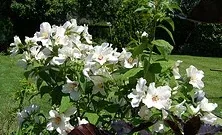
Mock Orange
(Philadelphus coronarius) Full sun to part shade Hardy in zones 4-8 Flowering shrub. Large rounded flowering shrub up to 12 feet high and wide, but can be kept pruned to a smaller size.
Early summer flowers have the sweet scent of orange blossoms. Prefers full sun and moist, organic, well drained soils. Will tolerate light shade and moist soils. Prune after flowering, can be pruned heavily to rejuvenate an old plant. Transplants well.
Hardy to zone 4, if protected perhaps in zone 3. Snow Dwarf is a fragrant dwarf reaching just 2 to 3 feet tall. Bred in Canada, it is truly hardy in zone 4 without protection. Blooms prolifically in spring, and will thrive in sun or part shade.
Philadelphus lewisii ‘Blizzard’ is even hardier, hardy in zones 3-7, and larger, reaching 4-5’high and 3’ wide. Clusters of fragrant single whit blooms cover the shrub from early to mid summer, lasting as long as 4 weeks.
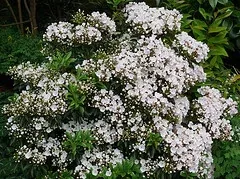
Mountain Laurel
(Kalmia latifolia) Part sun Hardy in zones 5-9 Flowering shrub. Preferring a dappled sun, Mountain Laurel performs well along a woodland edge, particularly where the soil is rich and pH is acidic. This is a fabulous spring blooming shrub if you have the right place for it.
It will not perform well in full sun or full shade, and does like cool moist soil that is acidic and organically enriched. Also avoid exposing it to harsh wind. The shrub will be compact and rounded in fuller sun, more open and loose in shade. Mountain Laurel produces showy flowers in late spring.
The blooms are produced in 4-6” clusters of 1” cup shaped blooms and are borne above glossy deep green foliage. In full sun foliage may tend to be more yellow. Even in cold and snow, the foliage remains evergreen through winter, although some varieties do not fare well in the more northern zones.
Kalmia is often referred to as Sheep Laurel or Sheep Poison, as the foliage is toxic if eaten, to both animals and humans. Do not plant where animals may graze or “taste” the foliage or if small children may be in the gardens. There are many varieties available.
Kalmia ‘Elf’
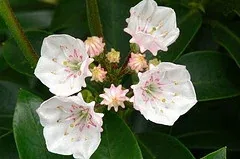
‘Elf’ is one of the more commonly grown varieties for a number of reasons. It is quite tolerant of the cold and often thrives in zone 4b, perhaps even 4a if in a protected place in the landscape and heavily mulched in winter. It was also the first dwarf available, making it ideal for the front of the border of foundation plantings.
It grows slow and compact reaching only 2 to 3 feet high and wide. However, very young plants grow vigorously, and should be pruned to keep them from getting leggy. Pink buds open to white blooms in May and June. ‘Elf’ is hardy in zones 5-8, 4 if protected.
Kalmia ‘Bullseye’ and ‘Olympic Wedding’
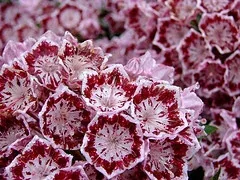
‘Bullseye’ is one of the very colorful varieties with blooms of white and red-purple. Blooms are not produced when young. Its’ growth habit is upright and vigorous, reaching 6 to 9 feet tall and wide. The blooms may last three or more weeks in May and June.
Will not tolerate the cold of zone 4, but withstand the heat of zone 9. ‘Olympic Wedding’ has bloom coloring very similar to ‘Bullseye’. ‘Olympic Wedding’ grows to about 6’ high with a 5’ spread and is hardy in zones 5 - 7 in the South, zone 8 in the West.
Kalmia ‘Olympic Fire’
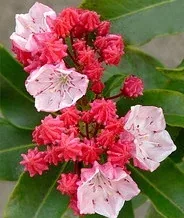
‘Olympic Fire’ is a very popular variety, with blooms that begin with a bright red bud, quite stunning along a woodland border. Once opened, pink blooms fade to pink tinged white. Bloom is a tad later, opening in early June.
The shrub grows at a moderate rate of about 4-6 inches per year, reaching up to 4 or 5 feet tall and wide, but could get larger in ideal conditions. Form is dense and rounded. Kalmia grown in moist shade can be susceptible to leaf spot, but ‘Olympic Fire’ is quite resistant. Hardy in zones 5 - 8. With winter protection, it may survive in zone 4.
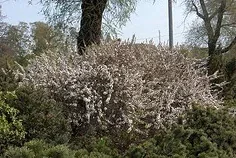
Nanking Cherry
(Prunus tomentosa) Full Sun Flowering shrub Hardy in zones 2-6. This is a densely twiggy shrub that becomes more open and quite picturesque with age. Fragrant white flowers bloom early in spring and produce edible fruit that ripens in June or July. Bark is reddish and exfoliating.
Medium to dark green foliage becomes yellow in fall. Must have full sun and will tolerate wind and drought. Great for windbreaks. Grows moderately quickly and is relatively short lived. May begin to deteriorate after 10 years. Reaches 8-10 feet high and 10-15 feet wide.
Ninebark
(Physocarpus) Full sun to part shade Flowering shrub Hardy in zones 2-7. Ninebark is a super hardy shrub, most are cold hardy to zones 2 or 3. They will grow well in soils that are dry, moist or wet, tolerate compacted soil, and alkaline soil. Will tolerate windy sites as well. They are a very serviceable shrub, though not all are particularly beautiful.
Most will need regular pruning to maintain a good shape, and are quite tolerant of severe pruning and shearing. But for difficult sites, for screening, or backdrop, they will do an excellent job and remain healthy in some poor conditions. For such needs, choose the ‘Nana’, which is 4-6’ high and wide, ‘Dart’s Gold’, or‘Luteus’.
Coppertina
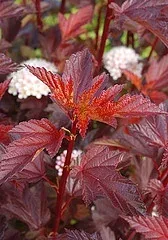
‘Coppertina’ is one of the more lovely Ninebark, with an upright vase shape form. Foliage is copper colored when young and matures to a rich red. Small white button flowerettes appear in mid summer, followed by red fruits in late summer to fall. Flower buds are set in late summer, so pruning should be done right after blooms have faded.
Best color develops when grown in full sun. It reaches 6-8’ high and 3-4’ wide. Excellent in groups or masses, as a foundation planting, or in the shrub or perennial border. It grows quickly, and provides all season color and interest. Hardy to zone 3.
Dart’s Gold and Diablo
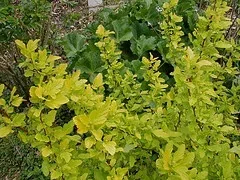
‘Dart’s Gold’ is a basic, but tough Ninebark, and the yellow gold foliage is a nice contrast to deep greens in the landscape or gardens. It is fairly compact is its growth habit, reaching 4-5’ high and wide. White flowers appear in early summer, and red fruits develop in mid to late summer. ‘Dart’s Gold’ is a very vigorous grower, but prunes or shears well. Hardy in zones 2-7.
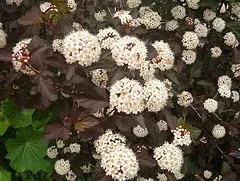
‘Diablo’ is perhaps one of the most appealing of the Ninebark, with beautiful purple burgundy foliage that has a very nice mounded growing habit. Generally reaches about 5-6’ high and 4-5’ wide, but can grow larger.
Creamy white flower clusters in June contrast wonderfully against the dark foliage, and fruits are reddish, but still stand out against the dark leaves. Best color is developed in full sun in more northern growing zones. (‘Diablo’ is trademarked, you may also find it marketed as ‘Monlo’ or ‘Diabolo’.)
Summer Wine
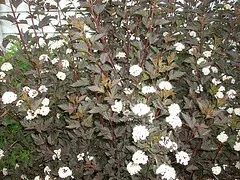
‘Summer Wine’ is very similar to ‘Diablo’, but is a more compact plant at 4-6’ high and wide. Foliage is a finely cut reddish purple, and should be grown in full sun for best color.
Pinkish white flower clusters appear in May and June. Flower buds are set in late summer, so pruning should be done right after blooms have faded. (‘Summer Wine’ is also trademarked, you may find it marketed as ‘Seward’.) Hardy in zones 3-7.
Potentilla
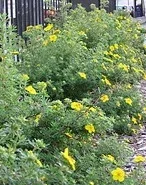
(Cinquefoil) Full sun Hardy in zones 2-6 Flowering shrub. Referring to the woody bush, this 2-3' mounded plant produces tiny bright flowers. This one has blurry lines between herbaceous perennial and woody shrub. You will find both types as potentilla and/or cinquefoil, cinquefoil simply being the old French common name.
If you select one hardy to your zone, with the physical characteristics you choose, it doesn’t really matter. The shrubby potentilla prefers moist well drained soils, but is very tolerant of either wet or dry, and very tolerant of alkaline and compacted soils. It is also drought tolerant and blooms from spring til frost.
If you think potentilla has been overused, it is because it is so very hardy and easy to grow. There are many nice varieties and bloom colors available, although the yellow are the old standby so commonly seen.
Trim it in very late autumn or early winter while dormant if you like, or just let it grow to its’ full size. It will usually retain a pretty nice shape without trimming. It is very tolerant of severe renewal pruning, but removing old branches to the ground with a light shearing periodically will keep the shrub fresh.
Abbotswood
Hardy in zones 2-6 depending on variety. May need part shade in the warmer climates to retain good bloom color. Potentilla fruticosa ‘Abbotswood’ is a dense, spreading shrub, making it nice for a low hedge. Growing habit is mounded with upright branches.
Perhaps the best white flowering potentilla, the blooms are large and set off nicely against the blue green foliage. Blooms from spring to fall. Grows to 3 feet high and wide. Best in full sun. Hardy in zones 2-6.
Gold Star
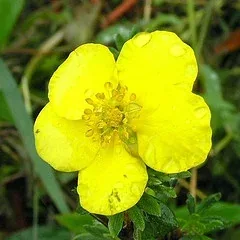
Potentilla fruticosa ‘Gold Star’ produces an abundance of 2”golden yellow blooms all summer. Deep green delicate leaves and a compact, mounded growing habit make a lovely specimen plant. It is a low grower, so it also works well as a ground cover or to “hold a hill”.
It will also do well in a container, but make sure to give it a good sized pot. Thrives in full sun. Grows quickly to 2 feet high and 2-3 feet wide. Hardy in zones 3-9.
Mango Tango
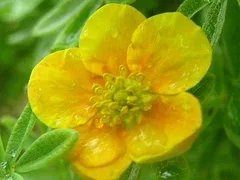
Potentilla fruticosa ‘Mango Tango’ is a lovely newer introduction, developed at the University of Manitoba. Bi-color flowers have a yellow base, with orange and red markings radiating from the center. 2” blooms are produced throughout the summer, shearing after the first spring flush of bloom will encourage reblooming.
In cool weather the blooms are more red and orange, developing more yellow as the summer heats up. Very adaptable to poor soil and wet or dry conditions. Neat and compact growing habit makes it a good choice for border planting. Reaches 2 feet high and wide and grows well in full sun to part shade. Hardy in zones 2-7.
Pink Beauty and Sunset
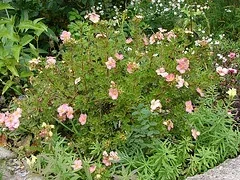
Potentilla fruticosa ‘Pink Beauty’ is a small rounded shrub that grows vigorously. Blooms are an intense pink in cooler weather, softening to a blush pink in summer heat. Bright green foliage is fine and lush. Compact mounded growth habit, reaches 2-3 feet high and wide. Does well in full sun to part shade. Hardy in zones 2-7.
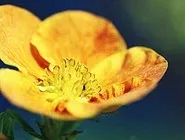
Potentilla fruticosa ‘Sunset’ has rich bright orange-red and yellow blooms from early summer to frost. In part shade color will be more red, in full sun more yellow. ‘Sunset’ is very hardy and long lived. Generally grows to about 2 feet high and 3 feet wide, but can get larger. Unpruned, the shrub may get a little leggy and sprawling. Hardy in zones 2-7.
William Rollinson
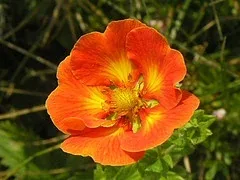
Potentilla atrosanguinea ‘William Rollinson’ is a wonderful low growing plant that produces masses of red orange double blooms with yellow highlights all summer. Grows in neat mounds of silvery backed foliage. Excellent as a ground cover, in a rock garden, or accenting landscaping or perennial beds. Performs best in full sun. Does not like hot or cold extremes. Grows to 16-24” high and 15-20” wide. Hardy in zones 4-8.
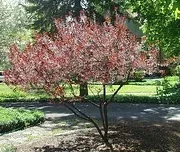
Purple Leaf Plum
(Prunus cistena) Full sun Hardy in zones 4-9. This Sandcherry shrub is commonly grown in the north because of its reliability and hardiness. The 6-8' bush sprouts bright red leaves in spring with tiny pink flowers. Well drained acid soil will bring out the best leaf color, but will tolerate alkaline soil as well as heat and drought.
Leaves turn red-purple, then maroon by fall. A nice color contrast to greens in the landscape. Prunus cerasifera is a larger version, that can grow to 25’ high and wide in a rounded shape. It grows fairly quickly, which tends to shorten a shrubs life. Both shrubs seem reliably hardy in zone 3.
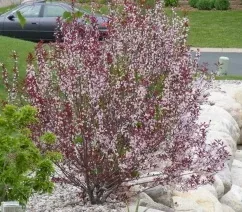
Purpleleaf Sand Cherry (Prunus x cistena) Full sun Flowering Shrub Hardy in zones 3-7. This tall shrub is generally grown for its unique foliage color. Leaves open bright red in spring, stay intense reddish purple all summer and turn more red in autumn. The shrub is covered in fragrant, small, blushed white blooms in May.
Beautiful as a specimen shrub or as a tall hedge, it does take pruning well. Prefers a moist well drained soil. Purpleleaf Sand Cherry does not live a long life, and may begin to decline after 10 years. Reaches 7-8 feet tall and wide.
Flowering Quince
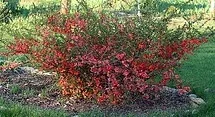
(Chaenomeles japonica) Full Sun to part shade Hardy in zones 4-8 Flowering shrub. This "fairy fire" blooms bright red, peach pink, or orange in spring. Foliage opens red bronze and turns dark green in summer. Excellent at the back of a border, hedge or foundations planting. Grows 2-3 feet tall and 3-6 feet wide, zone 4.
C. x superba 'Cameo' produces large semi double flowers in coral pink. ‘Jet Trail’ has white flowers and grows to about 3 feet. ‘Texas Scarlet’ is covered with red flowers and is smaller, at 2-3 1/2 feet. Quince prefers moist well drained soil, by will tolerate some dryness, also prefers a slightly acidic soil. Grows to 5 feet, most cultivars hardy to zone 5.
Rhododendron
Part to full shade Hardy in zones 4-7 Flowering shrub. Like the Azalea, no Rhododendron is hardy north of zone 4. Again, a few varieties have been bred to withstand the northern cold. Smaller varieties of Rhododendron, 'Yaku Princess' (Azalea) and the newer 'Firestorm' are also hardy up to zone 4.
There are an incredible number of cultivars hardy enough to grow in zones 5-7. The ‘P.J.M’ varieties are evergreen as well as some of the ‘Girard’ azaleas. Winter sun and wind can damage the evergreen foliage, so select an appropriate spot (keeping in mind sun and wind patterns are not the same summer to winter).
Rhododendrons are shallow rooted and should not be planted too deep. They prefer a cool, moist organic soil and are not tolerant of dry periods, make sure they get enough water. They do require acid.
Acidic fertilizers made for rhododendrons will help, yellowing of the foliage is an indicator of low acid. Rhododendrons continue to grow well into autumn and are susceptible to early freeze damage. Water thoroughly until the ground freezes to allow the plant to properly acclimate to winter. (Also see the Azalea listings.)
‘P.J.M.’ and ‘Northern Starburst’
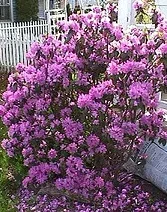
'P.J.M.' (R. carolinianum x dauricum) is one of the hardiest of the hybrids. It is a small leafed variety that prefers well-drained acidic soil with even moisture. The bushy plant blooms heavily with pink flowers early in spring. Blooming begins at an early age, unlike many that need a few years to mature before blooming.
Glossy dark leaves turn mahogany in winter, holding on most, if not all of winter. Grows to 6 feet high and 7 feet wide in part shade, but is more sun tolerant than large leaf cultivars, but should be protected from winter sun. Hardy in zones 4-7.
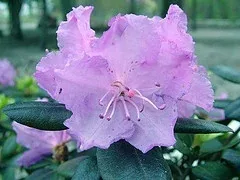
‘Northern Starburst’ is an improved, much more sturdy, variety of ‘P.J.M’. It is an early bloomer, in May, with strong stems. Clusters of mauve flowers have more substance than the ‘P.J.M.”. It has a compact growing habit that reaches 4-5 feet high and 2-5 feet wide. Leaves are thick and leathery, turning mahogany in autumn. Grows well in sun to part shade. Hardy in zones 4-7.
‘Haaga’
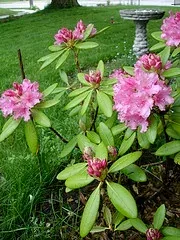
‘Haaga’ is one of the Marjatta hybrids from Helsinki, Finland. It is one of the best large leaf Rhododendrons for the north, bred from a very tough Korean species. ‘Haaga’ is a super hardy upright shrub with dark green evergreen foliage.
Dark pink flower buds appear in May and June, and open to a lighter pink with dark streaks. It must have excellent drainage, mulch and peat moss soil additive. It will not do well in wind. It prefers shade to part shade and may reach 5-7’ tall and 4-5’ wide. Hardy in zones 3-8.
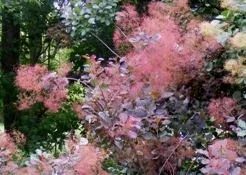
Smokebush
(Cotinus coggygria) Full Sun Hardy in zones 4 or 5 to 8 Flowering shrub. Smokebush is a large shrub with an upright, spreading habit that may be single or multi-stemmed. They are very tolerant of hot, dry sites and do well in poor, even gravely soils. Soil must be well drained.
Establishing and transplanting easily, Smokebush is excellent for difficult sites. Most commonly used is ‘Royal Purple’, with its’ velvety purple leaves and smoky beige flower, it creates a dramatic specimen plant. Although this variety is not fully hardy in zone 4, the warmer, southern parts of the zone, near 5, work quite well. Reaches 8-10’ tall and wide.
The hardiest of the purple leaved Smokebush is ‘Nordine’, but still may not make it in the coldest areas of zone 4. It holds it’s purple color well all season. Fall foliage is yellow orange. ‘Golden Spirit’ has a denser habit with bright yellow green leaves and vivid orange red fall color.
The smoky flowers are tiny pink. A little smaller in size, ‘Golden Spirit’ grows to 8’ tall and 6’ wide. ‘Grace’ is the largest at 15-25’ tall, and 8-15’ wide. Foliage is purple in spring, maturing to blue green with pale reddish tones. Mid to late summer, large smoky pink flowers cover the bush.
Spirea
Full sun Hardy in zones 4-8 Flowering shrub. One of the easiest flowering shrubs to grow, and many varieties offer many bloom and leaf colors. All have bright floral displays in spring. Many have wonderful autumn foliage with rich vivid leaf colors. They generally grow quickly retaining a nice shape, but can, and should be pruned after each flowering to produce another round of blooms.
Spirea prefers moist well drained soils, but will tolerate dry conditions. Will tolerate a variety of soil conditions, but a high alkaline soil may cause yellowing of the leaves, an acid fertilizer used for rhododendrons may help. Easily hardy in zone 4, with good success in zone 3.
‘Alpina’ and ‘Anthony Waterer’
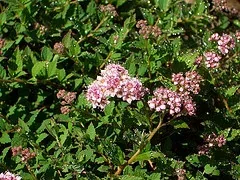
‘Alpina’ or ‘Daphne Spirea’ (Spiraea japonica) ‘Alpina’ has small blue green leaves that grow on short wiry branches. Clusters of light pink flowers appear in June, and will rebloom if spent blooms are removed. Remains quite small, reaching only about 12” high and 2-3 feet wide. Perfect for tucking in as an accent or bordering a garden. Grows well in full sun to part shade. Hardy in zones 4-8.
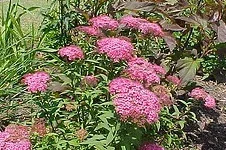
'Anthony Waterer' (Spireaea x bumalda) has pinkish red flowers from early summer into the fall. Foliage is maroon green and turns reddish purple in the fall.. It grows to about 3 feet high and 4-5 feet wide. Will do well in full sun to part shade. Mass plantings produce a sea of rosy blooms, or makes a well behaved low hedge. Hardy in zones 4-8.
‘Goldflame’ and ‘Goldmound’
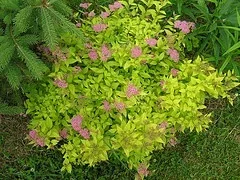
'Goldflame' (Spiraea x bumalda) flowers are crimson with leaves that start green gold, turn yellow, then orange-bronze by fall. New blooms appear all summer. Growing habit is low and nicely mounded. Reaches 3 feet high and 3-4 feet wide. Prefers full sun. Hardy in zones 3-8.
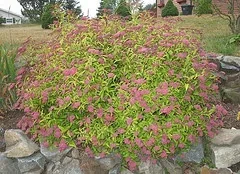
'Goldmound' (Spiraea japonica) is similar to the ‘Goldflame, but remains smaller, at about 2-3 feet. It’s smaller size makes it an ideal foundation planting, never outgrowing it’s space. Pink flowers will recur throughout the summer if spent blooms are sheared. Fall foliage is yellow-gold. Contrasts beautifully with dark green or blue green shrubs or evergreens. Full sun. Hardy in zones 3-8.
‘Little Princess’ and ‘Bridalwreath’
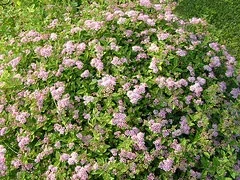
'Little Princess' (Spiraea japonica) blooms in a paler pink, with medium green foliage. Growing habit is low and mounding, also making it excellent as a foundation planting or in a border garden. Shear spent flowers to encourage reblooming. Fall foliage is dark burgundy red. Grows to about 1 or 2 feet high and 3 feet wide. Will do well in full sun to part shade. Hardy in zones 3-8.
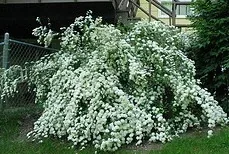
‘Bridalwreath’ (Spiraea x vanhouttei) ‘Bridalwreath’ is a distinctive spirea with arching branches. It makes an excellent specimen plant if you have the room. It grows 6-8 feet and spreads to 12 feet and is covered with white blooms in spring. Full sun produces the most flowers, but will grow well in some shade.
Prune back up to one third every year after blooming for best blooming next year. Will adapt to most soils, but prefers well drained. The leaves turn plum-green in fall. Hardy to zone 4 with good results in zone 3. Full sun Hardy in zones 4-8.
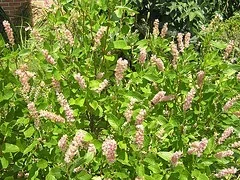
Summersweet
(Clethra anifolia) Full sun to shade Hardy in zones 4-9 Flowering shrub. An upright shrub with rounded to oval shape. When planted in shade may lack foliage at the base. Foliage is dark green, turning yellow to golden brown in autumn. Fragrant spires of blooms in mid to late summer, with fruit capsules in autumn.
The shrub is late to leaf out in spring, so be patient. They are also slow to establish, and may experience tip dieback the first winter. Although this is a beautiful flowering shrub, it can be invasive. Make sure to plant it in an area that you would be happy to see a colony form. It propagates by seed and suckers.
Summersweet does well in moist acidic soil. ‘Anne Bidwell’ is quite large at 6’ tall, and produces the largest flowers, a little later than the other varieties. ‘Fern Valley Pink’ is 4 feet high and wide with fragrant rose pink flower spikes in midsummer. ‘Hummingbird’ is best in moist to wet shady sites. It is compact with a dense mounded form, reaching 3-5’ high and wide.
Very fragrant and heavily flowered with white spikes in mid summer. Foliage is shiny with good fall color. ‘Ruby Spice’ has dark glossy, blue green foliage with fragrant, red bloom buds opening to intense pink flowers. Grows to about 3-5’ high and wide. ‘Ruby Spice’ is an award winning favorite.
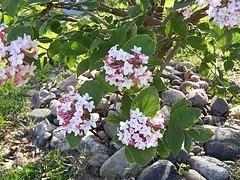
Viburnum
Full sun to part shade Hardy in zones 3-7 Flowering shrub. This reliably easy to grow species offers varieties large enough to screen out an undesirable view. Fragrant spring blooms and fall berries are a bonus. 'Korean Spice' (v. carlesii) has masses of fragrant pink, turning white blooms in early spring, giving way to clusters of black berries in fall.
Grows to 8 feet high and wide, full sun, zone 4. 'Wentworth' is a large, hardy Viburnum reaching 8-12 feet. White flowerheads in May and June are followed by bright red berry clusters in fall. Best flower and fruiting in full sun, but will tolerate shade.
Also known as American or European Cranberrybush, there are a large number of cultivars with a variety of characteristics, some will be hardy to zone 2 or 3. ‘Crispa’ is a dwarf that is hardy to zone 3, remaining under 2 feet. Foliage is fern like and turns brilliant purple-red in fall. Spring flowers are white.
‘Wentworth is hardy to zone 3, has white lacecap flower clusters and reaches 8-12 feet high and wide. It fruits heavily with bright red fruit clusters, and reddish purple fall foliage. The bark and young stems of Viburnum are susceptible to rabbit and rodent damage in winter. Wrap the stems/trunk with a collar or hardware cloth available at garden centers to protect them.
Weigela
Full sun to part shade Hardy in zones 4-8 Flowering shrub. This long time favorite of the Midwest Garden is very adaptable and prefers full sun, and will tolerate heat, drought, poor soil and Northern winters. Clusters of trumpet flowers that attract hummingbirds cover the bushes in spring and early summer.
Growth habit is rounded and dense, with slightly arching branches. Weigela has typically been grown for its’ spectacular summer flower show, but new cultivars with interesting and variegated foliage provides out of bloom interest to the garden.
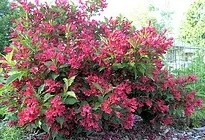
'Red Prince' has deep green, glossy leaves with cardinal red flowers, growing 4-6 feet unless pruned. Hardy in zones 4-8.
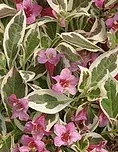
'My Monet' has bright and variegated leaves with pink flowers and remains small and compact, about 12-18". New spring leaves are tinged with bright pink. Hardy to zone 4 in sun or part shade.
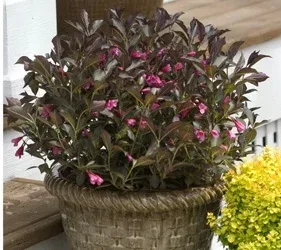
'Wine and Roses' has wonderful foliage in dark burgundy that shimmers like wind. Bright rosy pink blooms create a contrasting display against the dark leaves. In late summer the leaf color intensifies to a deep burgundy-black. Foliage reaches its’ most intense color in full sun. Hardy to zone 4, ‘Wine and Roses’ reaches about 4-5 feet tall and wide. Prune immediately after flowering as necessary.
Dappled willows
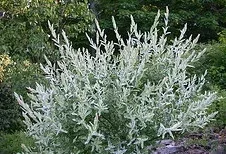
Japanese Willow 'Hakuro Nishiki': (Salix integra) Full sun to part shade Hardy in zones 4-7. The dappled willow has become widely available in the last few years in garden centers up to zone 4. Its' elegant arched branches hold showy cream and pink mottled leaves. It will do well in moist or dry soils.
It generally reaches about 4-6 feet high and wide, making a beautiful hedge for screening. The natural form is a large shrub, but garden centers have been grafting or pruning to an elegant tree. To maintain a tree form, continued pruning of trunk sprouts is necessary. See detailed article on ‘Hakuro Nishiki’ for more information.
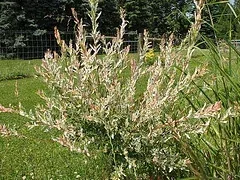
Dappled Willow ‘Flamingo’: (Salix integra) Full sun to part shade Hardy in zones 4-9. ‘Flamingo’ is an improved variety of ‘Hakuro Nishiki’, being very similar in size, growth habit, variegated coloring, and identical in growing conditions and care.
The foliage and branches are much stronger, so the ‘Flamingo’ will tend to hold foliage coloring a bit better, and leaf scorch is not a problem. The growing habit is slightly more upright than the ‘Hakuro Nishiki’, with smaller, thinner leaves. The color hues are perhaps a bit more intense in spring when the leaves are developing and the stems are young.
Arctic willow ‘Nana’
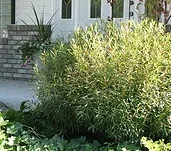
Dwarf Blue Leaf Arctic Willow ‘Nana’: (Salix purpurea) Full to part sun Hardy in zones 3-6. ‘Nana’ is a wonderfully textured plant, with soft feathery looking foliage tinted bluish. Branch stems are purplish in winter.
Will tolerate any soil type and is somewhat drought tolerant, but prefers moist soil. Growth habit is upright and rounded, reaching 3-4 feet high and 3-6 feet wide. ‘Nana’ prunes well, and makes a great hedge or border, or is great for erosion control on slopes and banks.
Pussy willow ‘Kilmarnock’
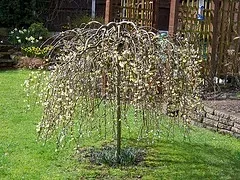
Pussy Willow ‘Kilmarnock’: (Salix caprea) Full sun Hardy in zones 4-8. “Kilmarnock’ is the most common pussy willow cultivar for garden use. It is a male clone, the similar female clone is ‘Weeping Sally”. ‘Pendula’, for weeping, is often attached to the cultivar name. Branches are stiffly weeping, and beautiful in winter when covered with catkins.
The male catkins are a quite showy, 1 1/2-2 inch silvery white, followed by golden anthers in April and May. Fine green foliage follows. They are grafted on erect stems of other willow, so the height is determined by the height of the trunk on which it was grafted.
They are generally sold as a small tree, the taller ones are generally marketed as a large full standard. If sold on it’s own roots, it will creep across the ground. Mature height of the actual bush is 18-24 inches. Pussy Willow is fast growing, prefers moist soil conditions, and adapts to pH.
Will grow well in a large container and transplants easily. Will also tolerate some shade. Ideal for wet open sites. Drawbacks in a garden or landscape: prone to insect, disease and canker problems; suckers; constant “litter” under the tree; and prone to wind and ice limb breakage.
Winterberry
(Ilex verticillata) Full sun to shade Intensely fruiting shrub Hardy in zones 3-9. Winterberry is stunning in late autumn and winter when the fruit is mature. But not all winterberry will produce fruit. Only female plants that have been pollinated will set fruit, and a male pollinator must be nearby. And they do not do well in high pH soils.
They will grow well in full sun to part shade, but when the female plants receive full sun, fruit is more plentiful. Winterberry is tolerant of poorly drained soils, preferring moist and acidic. ‘Jim Dandy’ is the most common pollinator, but make sure you get an appropriate pollinator for your female variety.
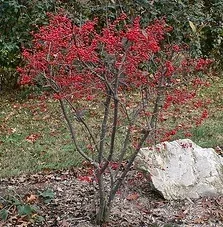
‘Sparkleberry’ is an award winning variety that is commonly used. It reaches 12’ high with an upright growth habit, and is leggy at the base. With this nearly natural tree form, a little extra pruning at the base would produce a more tree like shape. Abundant red fruit often hangs on until spring. This female winterberry uses ‘Apollo’ as a pollinator.
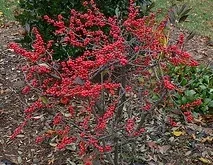
‘Red Sprite’ is a compact female holly with dark green glossy foliage. Vivid red fruit makes a striking winter display. Reaches 2-3 feet high and 3-4 feet wide. Uses ‘Jim Dandy’ as a pollinator.
Witch Hazel
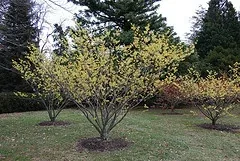
(Hamamelis virginiana ‘Common Witch Hazel’) Full sun to part shade Flowering shrub Hardy in zones 4-8. This large well rounded, vase shaped shrub, also prunes well to a tree form. It is multi stemmed and form is open and attractive. Spidery yellow flowers have a spicy fragrance, blooming in October and November after foliage begins to drop.
The shrub may still be in bloom after snow is on the ground. Leaves open reddish bronze and mature to green, finally turning yellow in fall. Witch Hazel prefers a moist, cool acidic soil. Excellent for very late autumn interest and in open, natural areas. Reaches 15 feet high and wide, has been known to reach 20 -25 feet high in good conditions.
Not hardy here
- Heavenly bamboo isn't reliably hardy in the Midwest (it needs Zone 6 or warmer), so it's not a good choice here.
- 'Lawrence Crocker' daphne isn't reliably hardy in the Midwest (it needs Zone 6 or warmer), so it's not a good choice here.
- 'Aureomarginata' daphne isn't reliably hardy in the Midwest (it needs Zone 7 or warmer), so it's not a good choice here.
- 'Nikko Blue' hydrangea isn't reliably hardy in the Midwest (it needs Zone 6 or warmer), so it's not a good choice here.
Shrubs to avoid
Several shrubs long sold for Midwest yards are invasive, so they're no longer on this list.
Amur maple (Acer ginnala) is invasive in the Midwest: its seedlings spread into prairies, grasslands and open woodlands, so please don't plant it. For a small tree or large shrub, plant Allegheny serviceberry (Amelanchier laevis) instead, a North American native hardy in Zones 4–9 that grows 15 to 25 feet tall.
Japanese barberry (Berberis thunbergii) is invasive in the Midwest: it spreads by seed into woodlands, so please don't plant it. Common ninebark (Physocarpus opulifolius), native to central and eastern North America and hardy in Zones 2–8, is a tough alternative.
Burning bush (Euonymus alatus) is invasive in the Midwest: it spreads by seed into woodlands, so please don't plant it. It's banned from sale in Minnesota, except the seedless 'ZeroSeed Blaze' and 'Fire Ball Seedless'. Black chokeberry (Aronia melanocarpa), native to eastern North America and hardy in Zones 3–8, is a non-invasive choice.
Privet is invasive in the Midwest: it spreads by seed into woodlands, so please don't plant it. That includes common, golden vicary, Amur and Chinese privet.
Wintercreeper is invasive in the Midwest: it spreads aggressively by runners, so please don't plant it. That includes 'Emerald Gaiety', 'Emerald and Gold', 'Blondy', 'Kewensis' and 'Moonshadow'.